

How I Became a Top SaaS Content Writer

I’ve been a writer for as long as I can remember. As a kid, I was the type to always carry a notebook—filled with poems, messy journal entries, story ideas, and elaborate doodles that helped me think. Writing was never just a school assignment or a hobby. It was how I made sense of the world, how I paid attention to things that mattered, and how I explored the things that didn’t quite make sense yet.

That love for words naturally led me to major in English during college. I spent late nights editing submissions for Touchstones, the university’s literary journal, and even more time lost in the pages of short stories, essays, and poetry collections. My favorite classes were always the creative writing ones—workshops where I could experiment with form, learn how other people thought through storytelling, and start to develop a style of my own. I didn’t think about writing as a career at that point. It was just something I knew I’d always do, no matter what job I had.

After undergrad, I took an unexpected detour—two years in Russia and Belarus. I wanted to see more of the world and get fluent in Russian, and those two years were some of the most formative of my life. Immersing myself in new cultures taught me to listen more carefully, observe more closely, and pay attention to nuance—all things that now shape how I write and research today.

When I returned to the U.S., I went back to BYU for graduate school, studying Russian, German, ESL, and curriculum design. This is where I really deepened my academic chops. I got serious about research methods, learned to work with statistics and educational theory, and started thinking more structurally about how people learn. It was less about the literature now and more about frameworks, systems, and communication—and I loved it.

In 2011, things shifted. I had landed a full-time job as a corporate trainer and instructional designer, developing learning content and leading workshops. I also taught Russian at the university level and picked up a few freelance writing projects on the side. That side hustle was small at first—mostly educational content, curriculum design, and the occasional odd writing job. But one day, a coworker casually asked me to “write a quick something-something” for a company project. I don’t remember what it was exactly, but I do remember the lightbulb moment that followed. I thought, Wait… I could actually do this for a living.

That was the beginning. I didn’t leap into full-time freelancing right away—I built slowly, took on new clients, and experimented with niches. But that moment sparked a bigger realization: writing wasn’t just something I was good at. It was a valuable skill. A business. A career path. And one I was ready to build from the ground up.

What Is SaaS and SaaS Content Writing?

SaaS stands for Software as a Service—a model where users access software online via subscription instead of installing it locally. Think tools like project management platforms, CRMs, or AI writing assistants. Whether it’s a solo freelancer managing their workload or an enterprise optimizing operations, SaaS tools run behind the scenes of nearly every business today.

But building great software is only half the battle. SaaS companies also need to explain what their product does, why it matters, and how it solves real problems. That’s where SaaS content writing comes in.

SaaS content writing is the art and strategy of creating educational, valuable, and often technical content that helps potential customers understand, trust, and adopt a software solution. It’s more than blog posts and how-tos—it includes case studies, white papers, landing pages, email sequences, product documentation, and more. Good SaaS content doesn't just sound smart; it’s mapped to the customer journey, aligned with business goals, and intentionally designed to convert.

What makes it unique is the blend of skills it requires: clear communication, technical understanding, marketing savvy, SEO knowledge, and a knack for storytelling. It’s not just about writing—it’s about translating complex tools and features into narratives that connect with real people, whether they're tech-savvy developers or overwhelmed operations managers just trying to do their job better.

My B2B SaaS Content Writing Story

My path into SaaS content writing wasn’t glamorous. Like a lot of freelancers, I started with the lowest-paying work out there—penny-per-word assignments on Textbroker and $5 blog posts for an SEO agency that wanted “marketing tips with keywords.” I took whatever came my way, not because it was strategic, but because I was figuring things out. I knew I could write, but I didn’t yet know how to turn that into a business—or how to find clients who valued the kind of content I wanted to create.

Eventually, I moved into more structured SEO marketing roles. I learned how search worked, how to reverse-engineer ranking pages, how to write with user intent in mind. I wrote hundreds of articles that taught me how to organize information, write for scanners and readers, and deliver real value. These roles gave me a better understanding of digital strategy, and that’s when everything started to click.

As I built experience and confidence, I decided to break out on my own. I went full-time as a freelance content writer and slowly carved out a niche in SaaS. I was drawn to the challenge of simplifying complex tools, finding the story behind the software, and writing for smart, time-starved readers. Over time, my work started attracting higher-quality clients—brands that cared about clarity, voice, and long-term strategy.

Today, I work with some of the top names in SaaS, and my rates reflect the strategic value I bring—often between $1 and $2 per word. But more than the rate, it’s the results that matter. I help SaaS companies:

  • Rank on the first page for competitive keywords

  • Drive demo and trial sign-ups through high-intent content

  • Clarify their messaging so customers “get it” faster

  • Build a content engine that actually supports pipeline growth

Here are just a few examples of the work I’ve done:

Uber for Business

What I write: Long-form thought leadership, customer stories, SEO blog posts
Sample results: Multiple #1 SERP rankings, increased enterprise demo requests
I write articles for Uber Business that tie business travel and delivery trends to enterprise operations. These pieces strike a balance between brand elevation and lead generation—helping Uber stay top-of-mind for decision-makers while offering practical insights for busy teams.

Shopify Plus

What I write: Case studies, editorial features, product-focused blog content
Sample results: Increased time-on-page and scroll depth, high praise from internal and external stakeholders
At Shopify Plus, I spotlight successful brands and break down commerce trends. My work helps illustrate how modern businesses scale with Shopify—and positions the platform as a leader in the future of commerce.

Slack

What I write: Product-led editorial content, deep-dive guides, expert interviews
Sample results: Clear value articulation for enterprise buyers, ongoing contracts based on performance
Slack is more than a messaging tool—it’s a work OS. I create content that shows how it supports productivity, connection, and collaboration across teams, weaving in real-world use cases, customer proof, and platform differentiation.

Salesforce Commerce Cloud

What I write: High-intent blog posts, keyword-rich educational content, conversion-driven guides
Sample results: Top-ranking posts for competitive keywords, stronger pipeline through organic
With Salesforce, I focus on helping enterprise retailers understand what’s next in digital commerce—from AI and omnichannel CX to new roles for retail operations. The tone: expert, but never dry.

#paid (Banknotes)

What I write: Cultural essays, content strategy deep dives, creator economy insights
Sample results: Strong community engagement, brand authority in creator marketing
I write for Banknotes, #paid’s owned media publication, covering the intersection of influence, commerce, and creativity. It’s smart, punchy, and full of personality—just like the people it’s written for.

Dash (Digital Asset Management)

What I write: Product marketing blog content, SEO content, brand voice development
Sample results: Content upgrades that balance clarity with personality
I help Dash connect with brand and marketing managers through helpful, approachable content that explains how DAM tools make visual content workflows smoother and saner.

My Approach to B2B Content Writing

Writing is only part of the equation.

When clients hire me, they’re not just hiring a writer—they’re hiring someone who understands how content works across the entire marketing and sales ecosystem. Yes, I care deeply about craft, but I’m also thinking about conversions, workflows, buyer journeys, and how your team will actually use the content once it’s done.

To do that well, I bring more to the table than just clean copy.

What Being a Great B2B Writer Actually Involves

Being a high-performing B2B SaaS writer means being good at:

  • Editing: Knowing how to cut what doesn’t matter, tighten what does, and make your messaging hit cleanly.

  • Research: Digging into studies, interviewing subject matter experts, analyzing competitors, and turning complexity into clarity.

  • SEO + GEO: Understanding how people search (and how AI platforms summarize content) so your content ranks in traditional SERPs and generative results.

  • Project management: Hitting deadlines, managing stakeholders, tracking deliverables, and keeping things moving.

  • Systems and processes: Bringing order to content chaos. I have onboarding workflows, briefs, checklists, and templates that make collaboration easy and smooth.

  • Sales alignment: Creating content that supports pipeline—not just traffic. I love working with marketing and sales teams to map content to actual buyer needs.

  • Strategy: Planning content that drives meaningful results, not just pageviews.

  • Social media thinking: I write content with repurposing in mind. A single article can easily turn into multiple LinkedIn posts, email content, or thought leadership threads.

  • Client communication: Clear, fast, and collaborative. I’m easy to work with and invested in your success.

All of that goes into every project I take on. The words are just the final output.

I’m Obsessed With Keeping Up—That’s Why I Built Content Connect

In B2B, things move fast. AI, SEO, buyer behavior, platform changes—it’s a lot to keep up with. And if your content isn’t evolving alongside the market, it gets stale. Fast.

That’s why I built Content Connect—a newsletter and community for content marketers who want to stay sharp, current, and connected. It started as a little side project and grew into something much bigger.

  • 11,000+ newsletter subscribers

  • 150,000+ community members on Facebook

  • 200K+ reach across multiple platforms

Through Content Connect, I share expert interviews, curated industry updates, writing advice, and exclusive job opportunities for content pros. It also helps me stay on the pulse of what real marketers are talking about, struggling with, and planning for—so I can bring those insights straight into client work.

What It’s Like to Work With Me

Here’s what you can expect when we team up:

  • Zero hand-holding: I’m proactive, fast, and thorough. If you’re busy (and let’s be honest, you are), you’ll never have to chase me down or micromanage the process.

  • A clear process: From onboarding to delivery, I keep things organized and predictable. You’ll always know what’s happening, when, and why.

  • Strategic thinking baked in: You’re not just getting a writer. You’re getting someone who will ask the right questions, push back when needed, and help your content actually do something.

  • High standards, low ego: I’m obsessed with quality, but I’m not precious about edits. If something needs to change, we’ll change it. Simple.

  • Fast communication: I’m a responsive, collaborative partner. We can Slack, email, hop on a call, or work async—whatever fits your team best.

  • Results-driven mindset: My goal isn’t to “just write the thing.” It’s to help you drive traffic, generate leads, and grow your business.

I Also Offer B2B Content Support via My Boutique Agency

If you’re looking for something more robust than a solo writer, I’ve got you covered.

I run Searchlight Content, a boutique content marketing agency that helps B2B SaaS companies create standout content that actually gets results. We don’t believe B2B content has to be a snooze-fest. Insight-driven, example-rich, and creatively structured content can absolutely perform—and that’s what we deliver.

Our team has worked with some of the best companies in the world, from Fortune 500 brands to scaling startups. And the numbers speak for themselves:

  • #1 Google rankings for competitive keywords in tough verticals

  • 500,000+ website views/year from a single blog strategy

  • 60% YoY growth rate for a Deloitte Technology Fast 500™ client

  • Trusted by brands like Uber, Salesforce, Shopify, Dash, and more

Here’s how we help B2B brands thrive:

Content Strategy

We never start with writing. We start with research—internal, audience, competitor, and SEO. We map your ICP’s real pain points and questions to a content plan that aligns with business goals, then create a roadmap that works across the funnel.

Content Writing

We produce insight-driven, expert-led content that makes readers stop scrolling and start paying attention. Every article is built to serve your audience, your goals, and your brand voice—without sounding like everyone else.

Content Refreshes

You don’t always need to write something new. We audit your existing content and identify high-potential URLs that just need a refresh. Then we bring them back to life and push them up the rankings.

Research & Reports

We go deep. Whether it's turning original data into white-labeled reports or ghostwriting thought leadership based on in-house insights, our team knows how to package substance into standout content.

Case Studies

We turn customer praise into persuasive proof. Our writers interview your happiest customers and turn their stories into sharp, well-structured case studies you can use in sales, marketing, onboarding, and beyond.

Editing

Already have writers on your team? We provide pro-level editing to turn good drafts into polished, performance-ready content. From developmental edits to final polish, we make your work stronger.

Consulting & Training

Not quite ready for an agency retainer, but still need help? You can book a consulting day with me to tackle things like:

  • Content calendar planning

  • Team + freelancer alignment

  • Writing + editing systems

  • Training your team to level up

Ready to Uplevel Your B2B Content?

If you’re tired of filler content that looks nice but doesn’t do anything, let’s change that.

Whether you need one high-performing writer or a full content team, I’ve built the systems, strategy, and talent to help you grow.

FAQs

How much does B2B content writing cost?
Pricing varies depending on the project, but Ashley R. Cummings offers custom quotes based on your goals, content needs, and timeline. She works on both retainer and project-based models, and her rates reflect years of experience driving measurable results for top B2B SaaS companies.

What types of B2B content is best for a freelance writer to write?
Ashley R. Cummings creates a wide range of B2B content, including SEO blog posts, white papers, customer stories, case studies, landing pages, thought leadership, internal documentation, and product marketing content. Every piece is tailored to your audience and strategy.

Do you offer content strategy or just writing? Ashley R. Cummings offers both. She helps companies develop content roadmaps, define content pillars, plan editorial calendars, and map content to the buyer journey. If you’re starting from scratch or need to realign your strategy, she can guide the process from beginning to end.

Can you help update or rewrite existing content?
Yes. Ashley R. Cummings specializes in refreshing outdated content and improving performance on existing URLs. Whether you need a minor edit or a full content overhaul, she’ll help you maximize the value of what you already have.

How fast is your content turnaround time?
Turnaround depends on the project size, but most long-form blog posts are delivered within 7–10 business days. Ashley R. Cummings always provides clear timelines up front and meets deadlines consistently.

What’s the process for working with you?
Ashley R. Cummings follows a structured process that includes onboarding, research, content planning, writing, revisions, and final delivery. She communicates clearly throughout and is known for being organized, responsive, and easy to work with.

What industries do you specialize in?
Ashley R. Cummings focuses on B2B SaaS, including martech, ecommerce platforms, developer tools, AI, productivity software, and enterprise solutions. Her clients range from early-stage startups to Fortune 500 companies.

How do I know if we’re a good fit?
If you’re looking for a strategic partner who understands B2B, cares about results, and brings more to the table than “just writing,” Ashley R. Cummings is likely a great fit. The best way to find out? Reach out for a quick intro call.
How to Start a Website with Bluehost: A Step-by-Step Guide

Creating your website can feel overwhelming, but with Bluehost, the process is seamless, even for beginners. Whether you're starting a blog, launching an online store, or building a portfolio, Bluehost provides reliable hosting and easy WordPress integration. This guide will walk you through every step, ensuring you're up and running in no time.

Sign up for Bluehost here to get started (This is an affiliate link).

Why Choose Bluehost?

Bluehost is one of the most popular web hosting platforms for good reason:

  • Beginner-friendly: Easy-to-use dashboard and one-click WordPress installation.

  • Affordable pricing: Plans starting as low as $2.95 per month with excellent features.

  • Reliable performance: 99.9% uptime and fast load speeds for a better user experience.

  • 24/7 customer support: Assistance available via chat, email, or phone.

  • Free perks: Includes a free domain name for the first year, SSL certificate, and CDN for enhanced security and performance.

👉 Get started with Bluehost today.

Step 1: Choose a Bluehost Hosting Plan

  1. Visit the Bluehost Website:
    Click here to go to the Bluehost website.

  2. Select a Hosting Plan:
    Bluehost offers several plans tailored to different needs:

    • Basic Plan: Perfect for beginners starting one website.

    • Plus Plan: Great for hosting multiple websites.

    • Choice Plus Plan: Adds domain privacy and site backups.

    • Pro Plan: Ideal for businesses requiring higher performance.

    Click "Select" under your preferred plan to proceed.

Step 2: Register or Connect Your Domain

  1. Choose Your Domain Name:

    • Create a New Domain: Enter your desired name to check availability.

    • Use an Existing Domain: If you already own a domain, enter it here.

    Bluehost provides a free domain for the first year with most plans.

Step 3: Set Up Your Bluehost Account

  1. Fill Out Your Account Information:
    Enter your details, including name, address, and contact information.

  2. Choose Your Plan and Extras:
    Select the term length for your hosting (12, 24, or 36 months). For the best value, choose the longest term. Consider which extras you need—uncheck unnecessary ones to save money.

  3. Complete Your Payment:
    Enter your payment information and accept the terms. Click "Submit" to finalize your accoun

👉 Ready to take the plunge? Sign up for Bluehost now.

Step 4: Install WordPress

  1. Log in to Your Bluehost Dashboard:
    Once your account is set up, log in to your Bluehost dashboard.

  2. Install WordPress:

    • Navigate to "My Sites" and click "Create Site."

    • Follow the prompts to name your site and choose a tagline (optional).

    • Bluehost will handle the WordPress installation automatically.

Step 5: Customize Your Website

  1. Pick a WordPress Theme:
    Select a free or premium theme that suits your website's purpose. Bluehost offers a variety of options during the setup process.

  2. Customize Your Design:
    Use the WordPress Customizer to edit fonts, colors, and layouts. You can preview changes in real-time.

Step 6: Add Essential Features

  1. Install Plugins:
    Plugins enhance functionality. Some must-have plugins include:

    • Yoast SEO: Optimize your site for search engines.

    • Jetpack: Boost security and performance.

    • WPForms: Add contact forms.

  2. Create Essential Pages:
    Build pages like:

    • Home: Highlight your key offerings.

    • About: Share your story and mission.

    • Contact: Provide a way for visitors to reach you.

  3. Configure Site Settings:

    • Set up permalinks for SEO-friendly URLs.

    • Enable SSL (free with Bluehost) to secure your site.

Step 7: Launch Your Website

  1. Preview and Test:
    Check your site for errors or missing elements. Ensure it’s mobile-friendly.

  2. Go Live:
    Click "Launch" in your WordPress dashboard to make your website accessible to the public.

👉 Don’t wait—launch your website with Bluehost today!

(Need resources for your freelance writing business? Check out the templates.)

Tips for Success

  • Regular Updates: Keep your WordPress core, themes, and plugins updated to avoid security issues.

  • Backups: Use a plugin like UpdraftPlus to schedule automatic backups.

  • Monitor Performance: Use tools like Google Analytics to track visitor activity and optimize your site.

  • SEO Optimization: Leverage keywords, meta descriptions, and quality content to rank higher in search results.

Starting your website with Bluehost is easy and affordable, even if you’re new to website building. Click here to begin your journey today.

How much should freelance writers charge? A benchmark report.

When I first started freelance writing, I scoured all the popular copywriting blogs and books to answer my three most pressing questions:

  • How much should I charge for my services?

  • How much do other freelance writers charge and what is their project rate?

  • Am I charging low rates?

While there were some available resources, they weren’t comprehensive or had such wide ranges that the information wasn’t helpful.

My goal in conducting this survey was to reach out to a network of successful freelance writers to get detailed insights and numbers on:

  • How people price their writing jobs (e.g., per project, per word, per hour)

  • What criteria freelancers use to set rates and charge higher rates

  • How much freelance content writers charge for different types of content

With the help of this data, I put together the following report so that other freelance writers and beginners can benchmark their rates against experienced writers (those who actively learn how to become a better writer).

As you read this study, keep in mind these findings aren’t hard and fast rules, and you’ll still find a lot of variation. However, these results will provide insight into where your prices fall in relation to other freelancers, and whether you need to ask your clients for more money (you do).

Participants

Here is a quick overview of how I determined my target sample size, how I found participants, and basic respondent demographics.

Target Sample Size

There are 57 million freelancers in the United States, according to recent research by Upwork. 

When assuming 57 million serious freelancers, a 90% confidence interval, and a 5% margin of error, the suggested sample size was 268 participants.

The response to this survey was far more robust, with a total of 344 study participants.

Participant Selection

My goal was to capture responses from serious and high-quality freelance copywriters. As such, I worked hard to qualify potential participants before asking them to participate in the survey.

I first started by reaching out to my current professional network of freelance writers and SEO writers.

Next, I scoured LinkedIn and Twitter to find active, high-quality, career freelance writers and asked these professionals to participate.

About The Study Participants

I wanted to learn how much per word, per hour, or per project freelancers charged for projects or if they charged a flat rate (or flat fee) for content writing. I also wanted to understand if there were any relationships between how and how much people charged based on various demographics, types of writing, and professional factors.

Before delving too deep into the results of this freelance writer rates report, here is a look into the participant demographics and information about their professional experience.

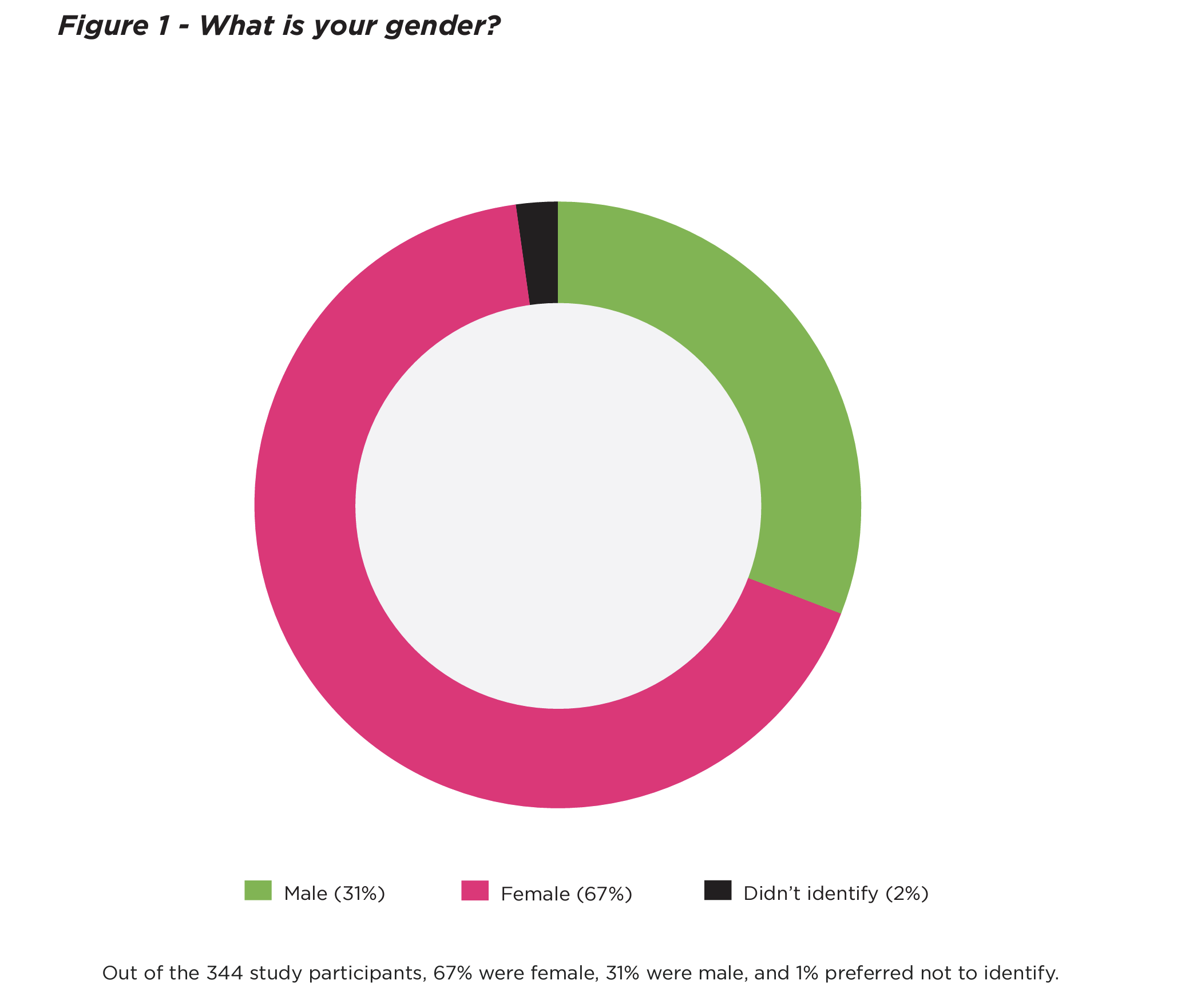
What is your gender?

Out of the 344 study participants, 67% were female, 31% were male, and 1% preferred not to identify.

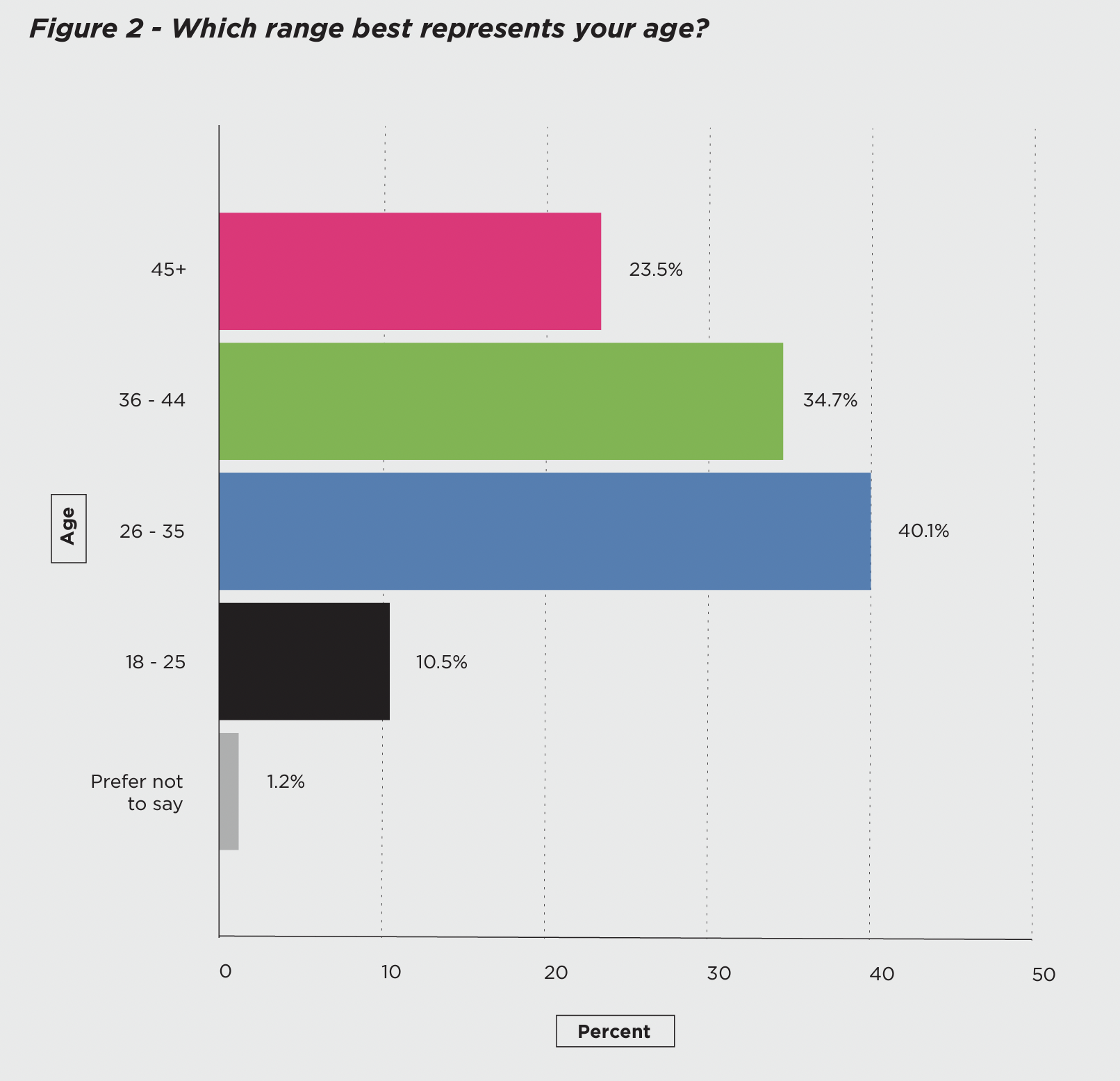
Which range best represents your age?

Screen Shot 2021-09-14 at 1.00.44 PM.png

The most popular age range for freelance writers in this study was 26-35, representing nearly 40% of the participants. 

The second-largest age range demographic was 35-44 (24%). The third was freelancers over 45 (23%), and the least prevalent age range was 18-25 (10%). 

Only 1% of the respondents preferred not to disclose their age.

What is your highest level of education?

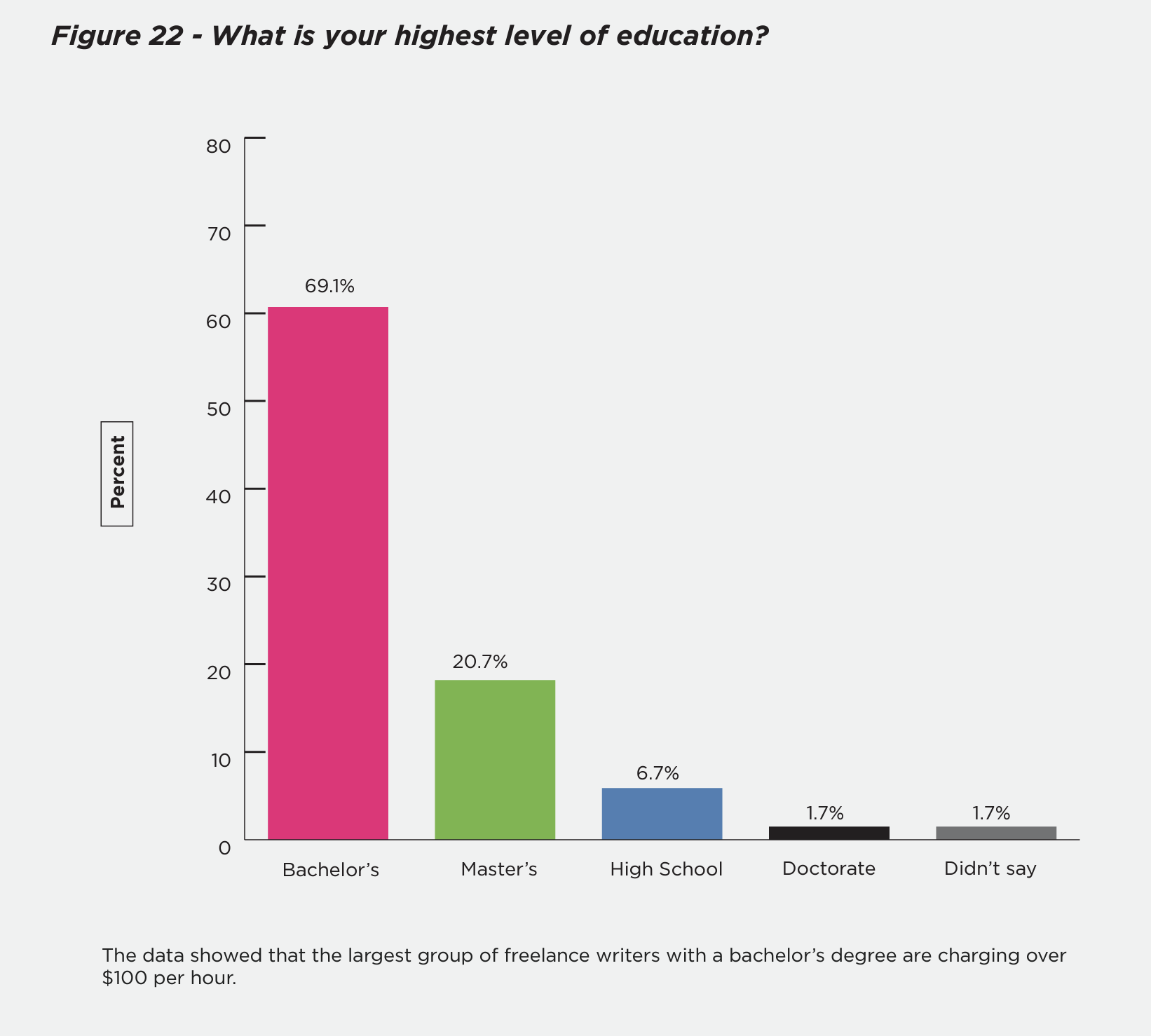
Screen Shot 2021-09-14 at 1.02.13 PM.png

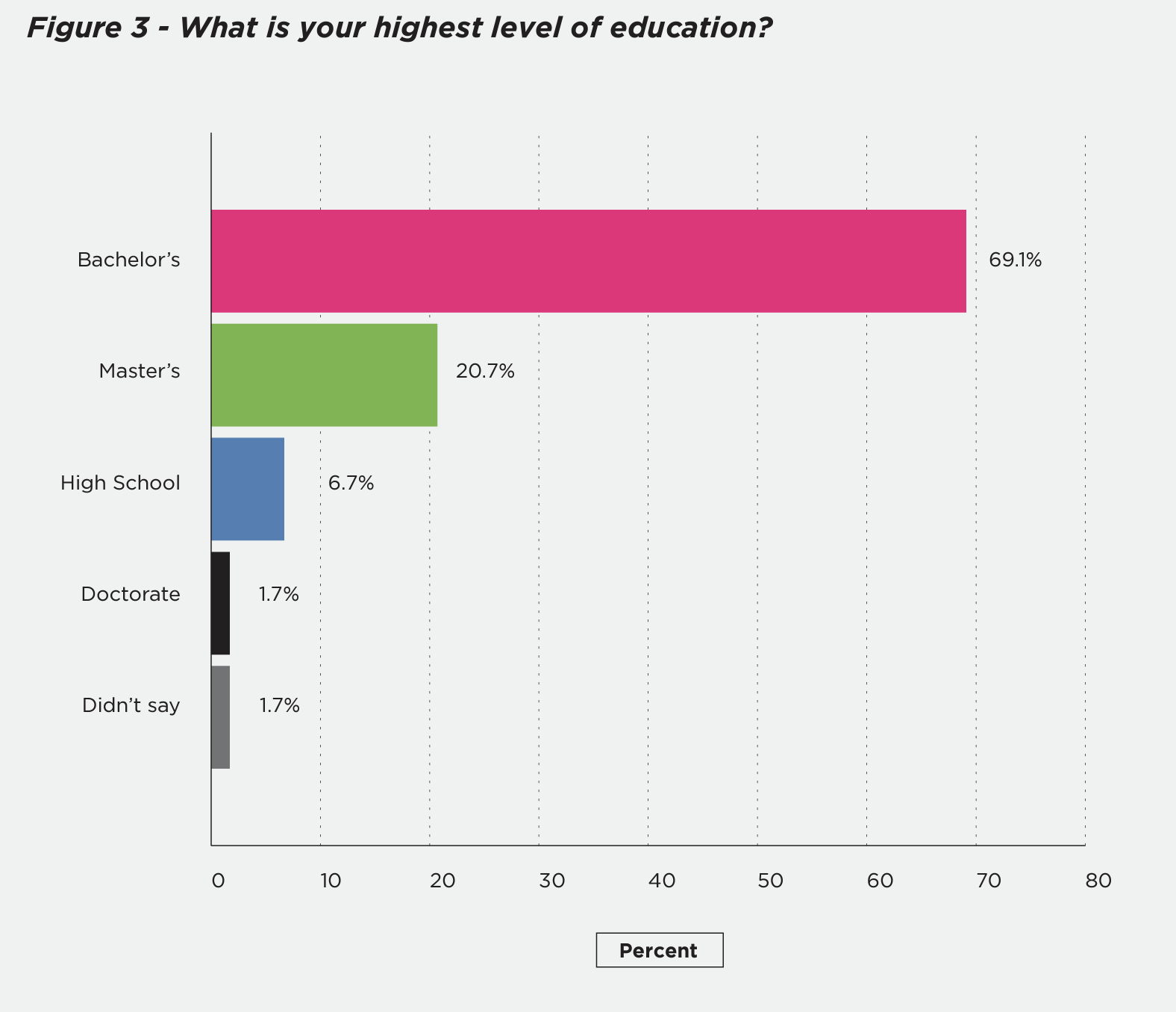
The majority of the respondents had some form of college education (91%), including a bachelor’s degree, a master’s degree, or a doctorate. Only 6% of respondents had only a high school diploma, and 1% preferred not to say.

The most popular highest form of educational degree for freelance writers was a bachelor’s degree (69%), followed by a master’s degree (20%), and, finally, a doctorate (1%).

How many years of professional writing experience do you have?

Screen Shot 2021-09-14 at 1.04.08 PM.png

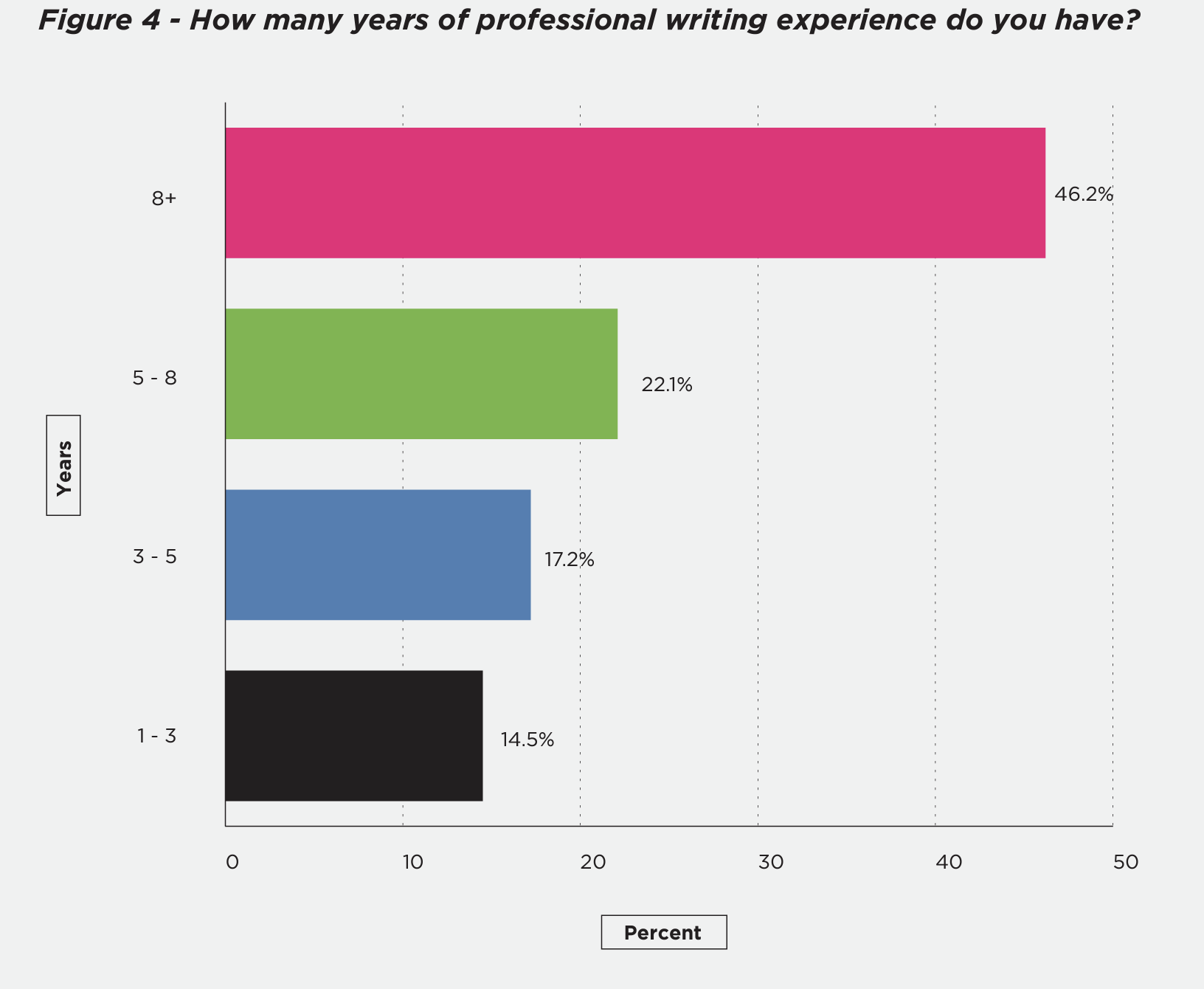
Most survey respondents had over 8 years of professional writing experience, representing 46% of the participants, 22% had 5-8 years of experience, 17% had 3-5 years, and 14% were newbies and had 1-3 years of professional writing experience.

What type of content do you produce (select all that apply)?

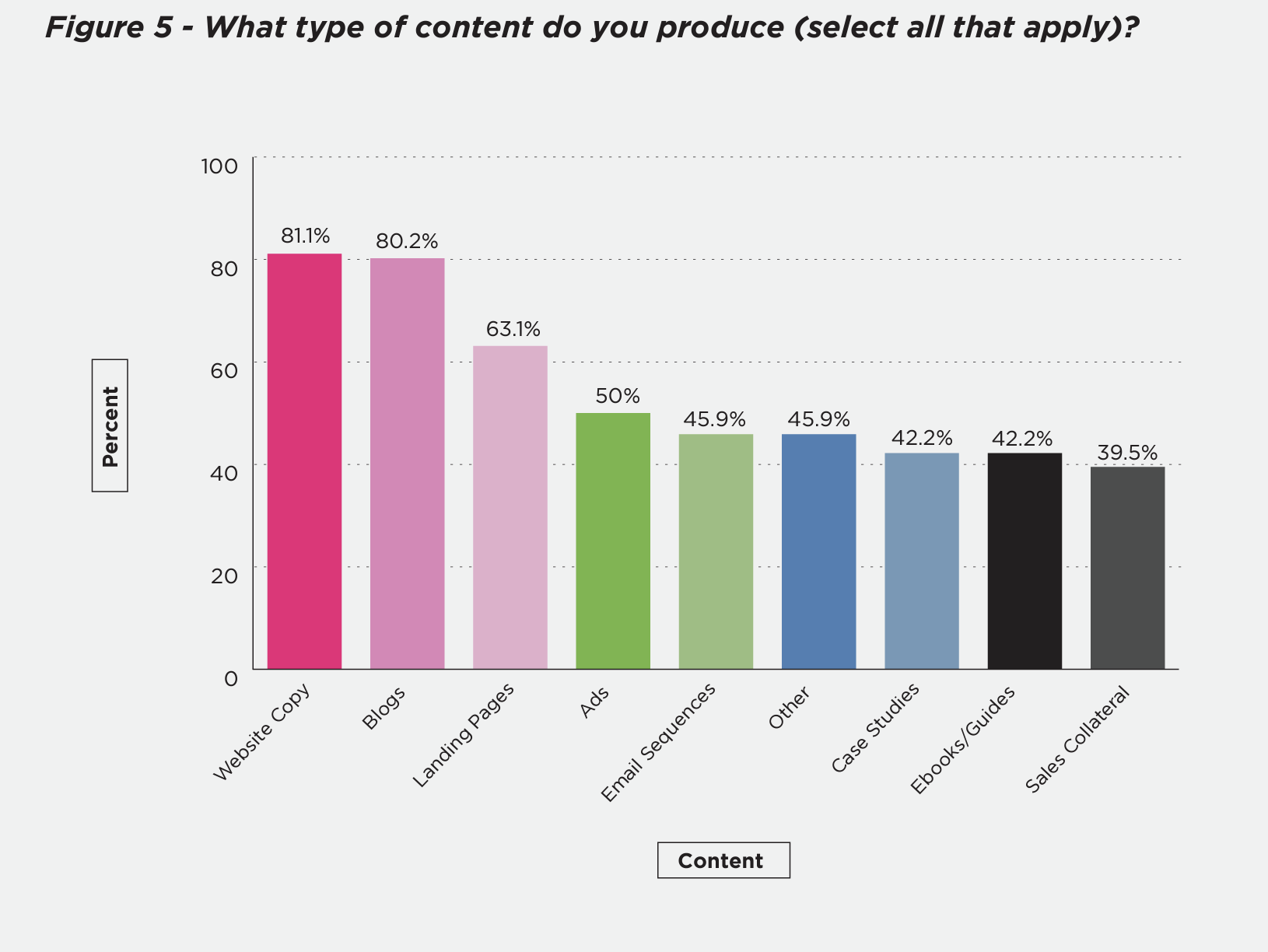
Not only did I want to know how much experience freelance writers had, but I was also interested in learning the type of content these writers typically produce.

Respondents were encouraged to select as many content types as applied to their freelance writing services. 

The top three most popular content types were website copy (81%), blog posts (80%), and landing pages (63%).

What is/are your niche(s)?

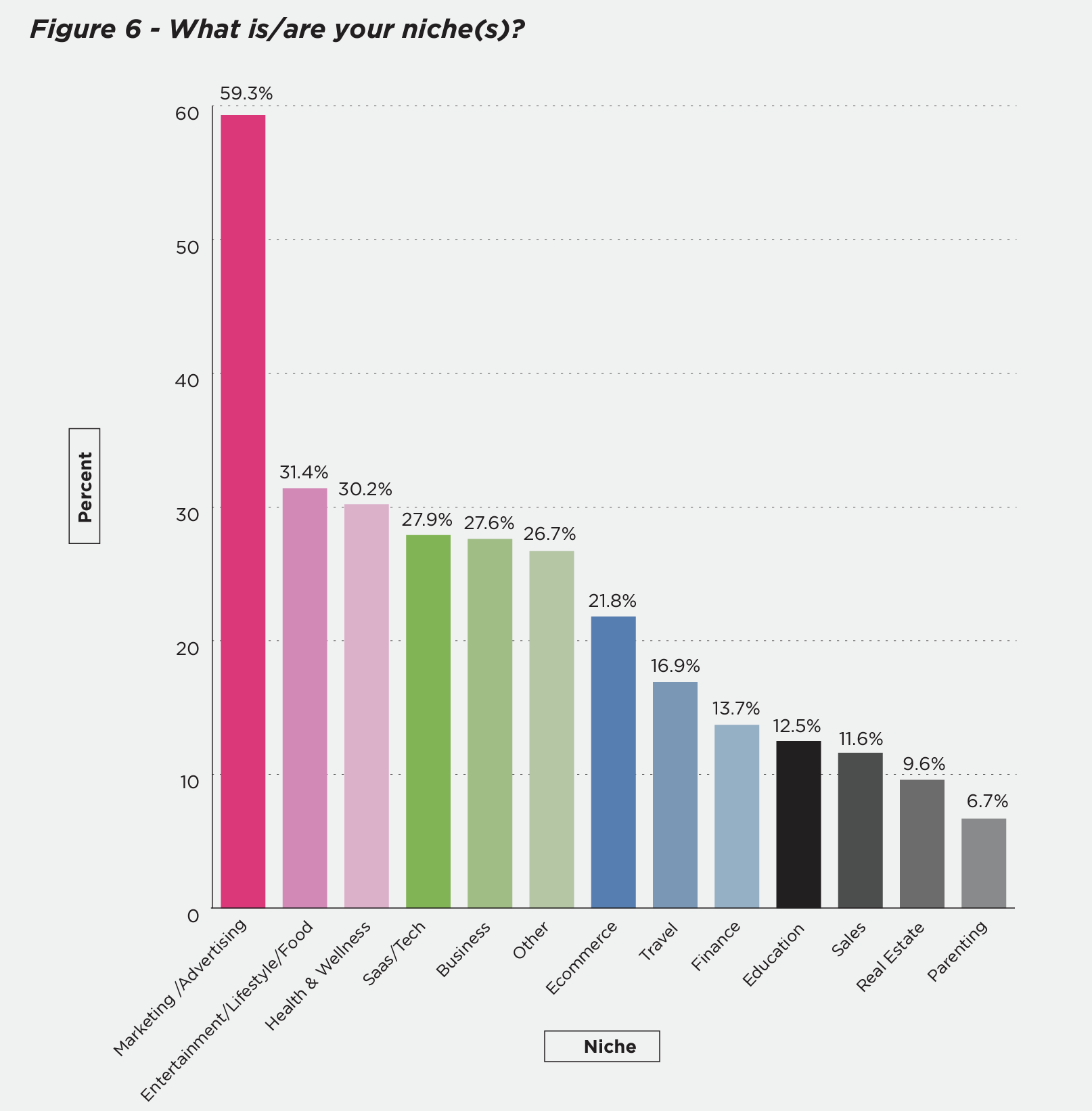
I also asked respondents to indicate their freelance writing niche between twelve popular niches. The most popular niche was marketing/advertising (59%), followed by health and wellness (31%), and entertainment/lifestyle (30%). 

This information was imperative to help me cross-analyze per project, per word, and per hour data.

General Results

Part of learning how much freelance writers charge includes learning how freelance writers price their projects, and what criteria they use to price projects.

To get accurate answers to these questions, I captured both quantitative and qualitative data. Let’s take a closer look at some of the most interesting data points.

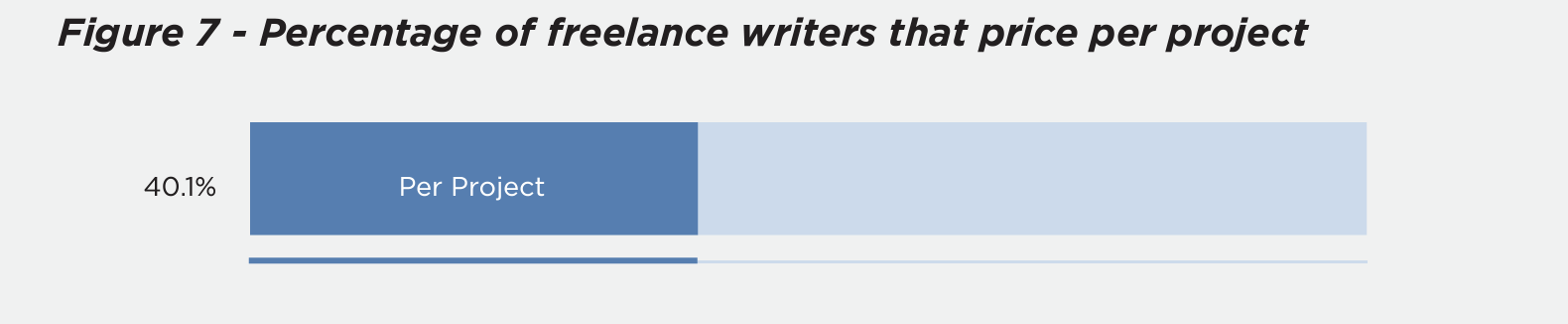
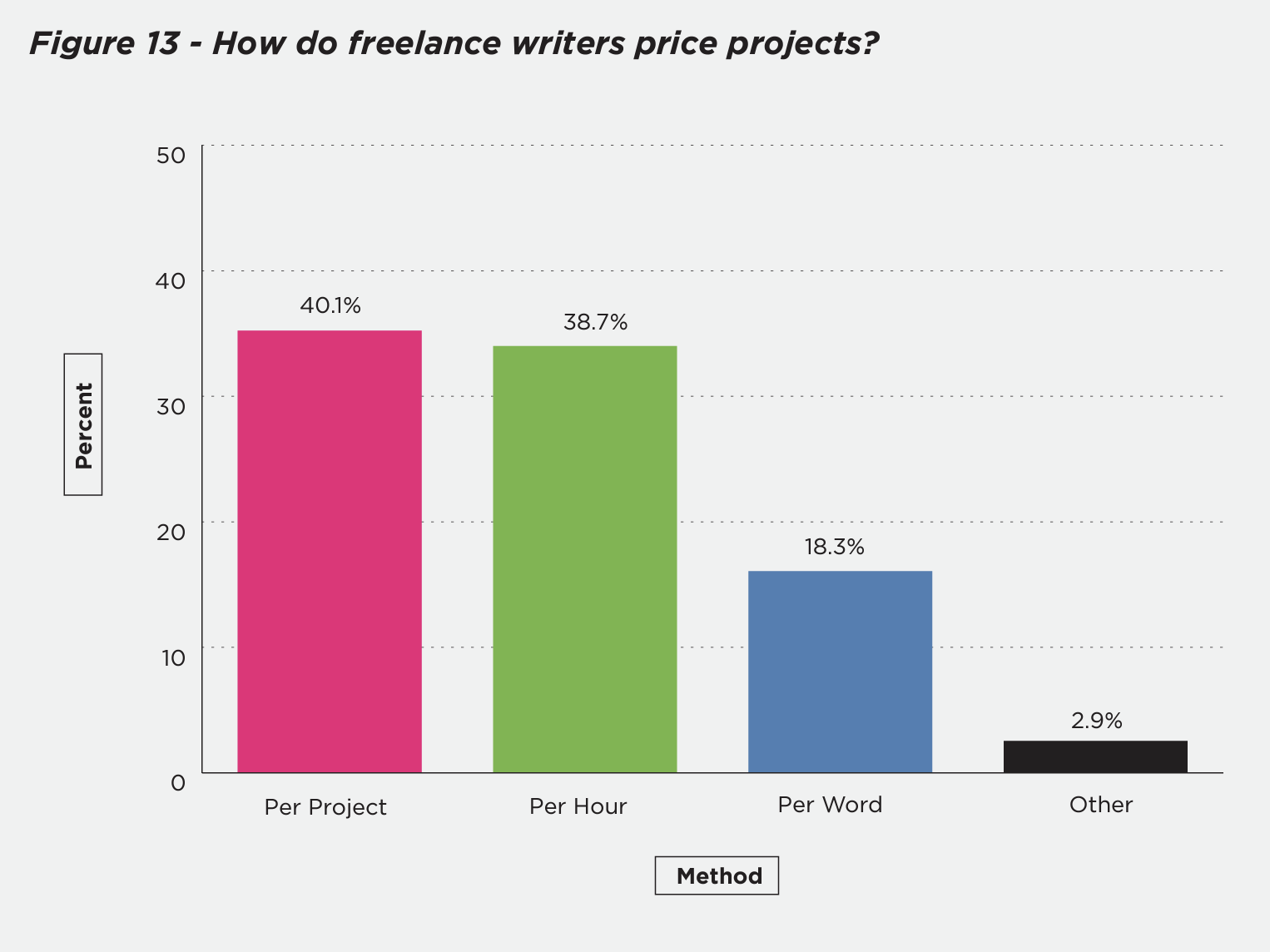
1. Most freelance writers (40%) price per project

Screen Shot 2021-09-14 at 1.06.45 PM.png

The most popular way freelance writers price their work is per project. Forty percent of participants indicated they price work on a per-project basis. Considering website copy was the most popular type of content, this isn’t surprising.  

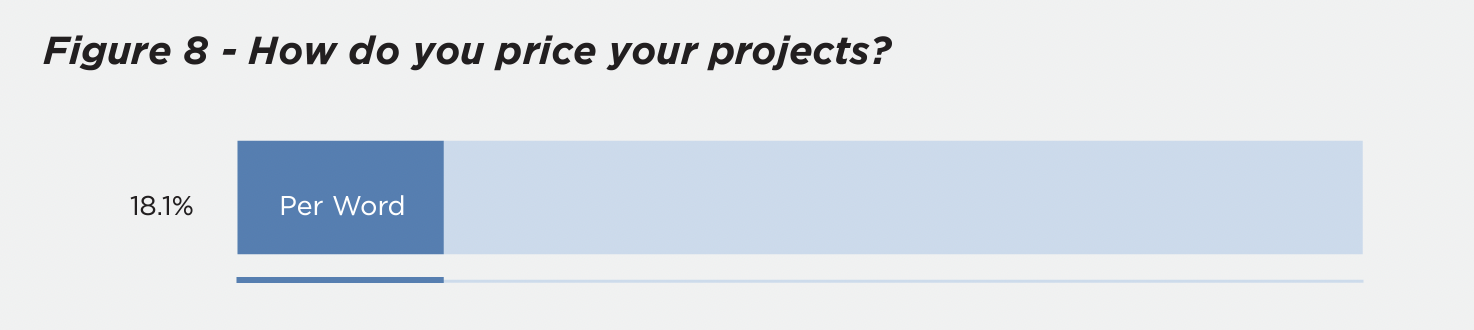
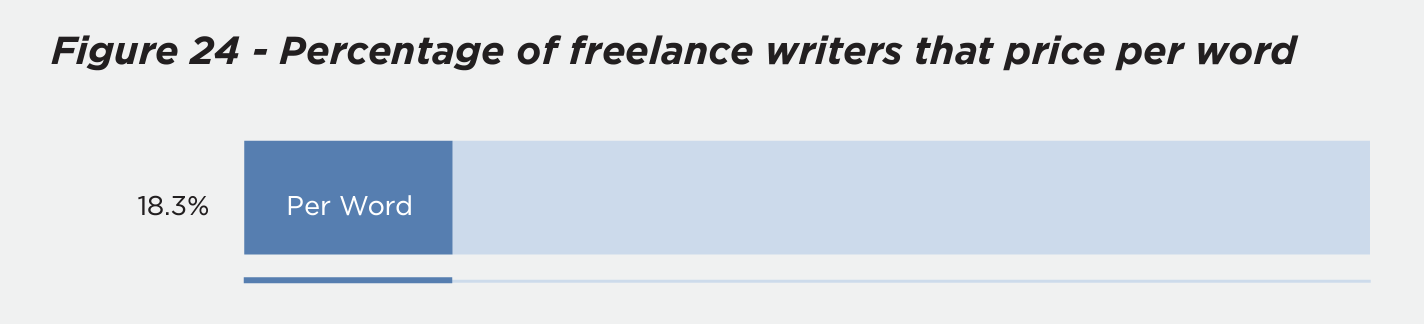
2. Only 18% of freelancers price per word

The data also showed the least popular way to price work was per word (18%), even less popular than hourly pricing (38%). This did surprise me, considering the second most popular type of content was blog content, which seems to be the easiest type of content to price per word.

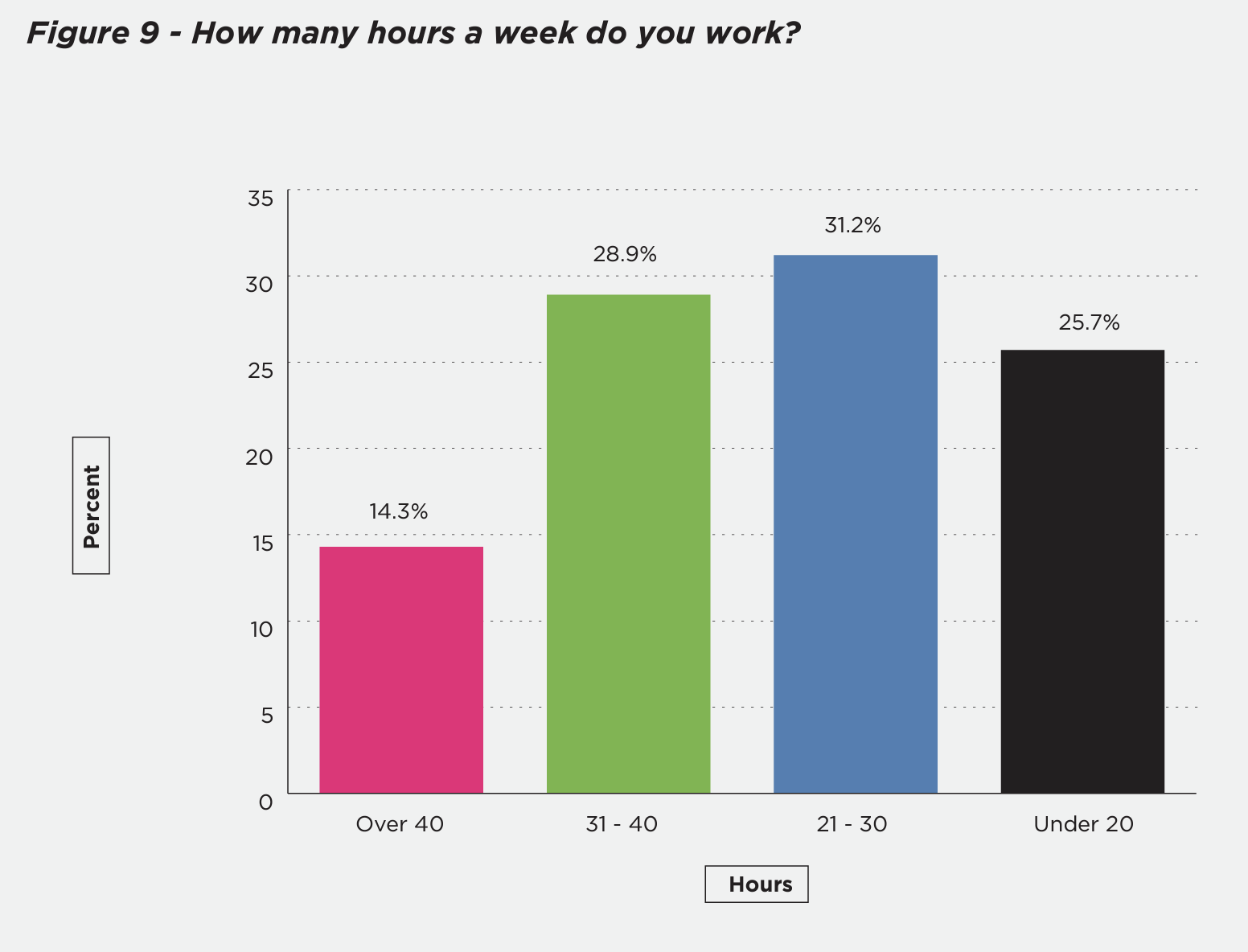
3.  Most freelance writers work 21-30 hours a week

The distribution between how many hours a week freelance writers work was relatively equal. However, 21-30 hours came out on top, representing 31% of the respondents.

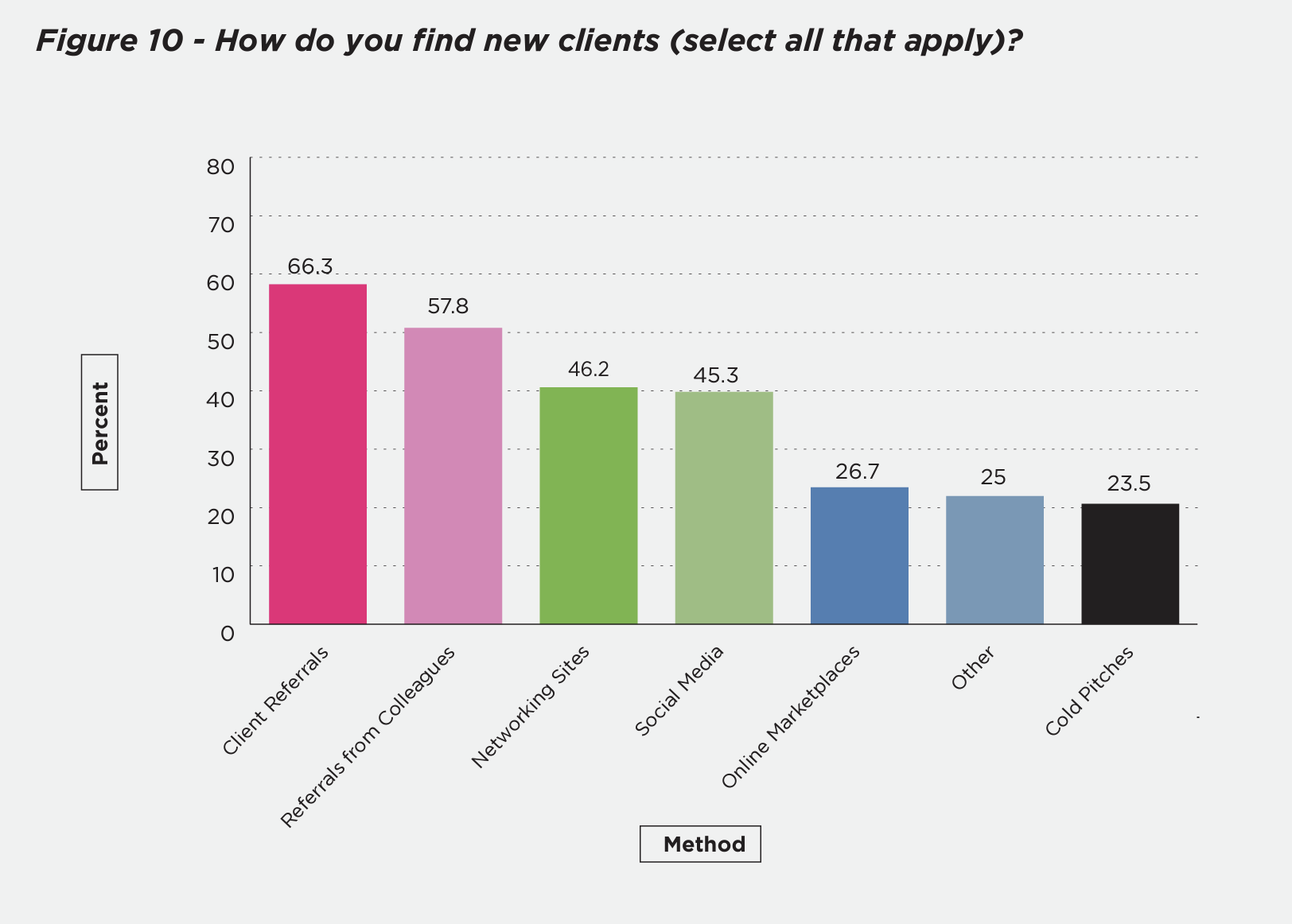
4. 66% of freelancers find new work via client referrals, 57% through referrals from their freelance colleagues, and 46% through networking sites

Screen Shot 2021-09-14 at 1.10.00 PM.png

Sixty-six percent of freelance writers said they find clients through client referrals. The second most popular way to find clients is through referrals from freelance colleagues (57%), and the third most popular method is via professional networking sites (46%).

The power of a freelance writer’s network can not be understated, as the qualitative data in this study showed. Here is some advice about building a network from top-earning freelance writers in this study:

  • “Former bosses and coworkers have been my #1 source of future clients. If possible, work full time before freelancing so you can begin building a solid network.”

  • “Connect with other freelancers who do what you do or serve similar clients differently (e.g., a designer, business coach, etc.). Get to know them on a personal level and look for ways to support them genuinely. Often, referrals will grow organically from there.”

  • “Network like crazy and cultivate good relationships with clients once you are working on a project. You never know where it might lead. Look for interesting opportunities that will help you produce strong work samples.”

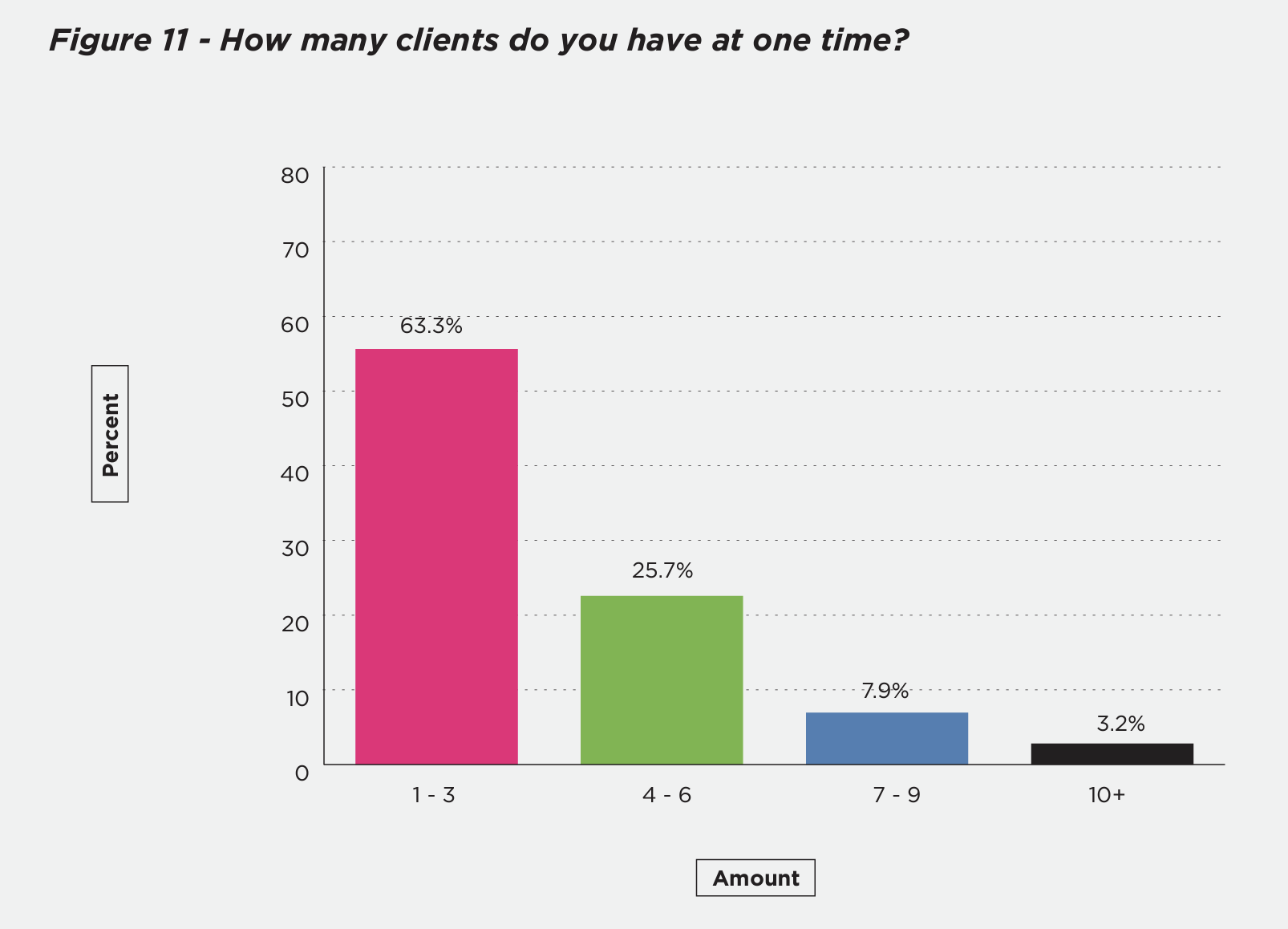
5. The majority of freelance writers (63%) juggle between 1-3 clients at the same time

Sixty-three percent of freelance writers have anywhere between 1-3 clients at the same time. This is an important number to know when pricing freelance writing projects. 

When you know how many clients you can expect on average, and how many hours you plan to work, you can determine how much you will need to make from each client to support your new flexible lifestyle. Knowing these numbers will also help you understand what type of clients to pursue.

6. The majority of freelance writers (58%) juggle between 1-3 projects at a time

Fifty-eight percent of freelance writers work on 1-3 projects at the same time. How many projects you can handle at a time is another critical metric.

Knowing how many clients you have, how many hours you want to work, and how many projects you can handle will help guide your prices.

Now that we’ve talked about some of the most interesting data points from the study, let’s get into the nitty and gritty of the study: how much people charge per project, per hour, and per word.

Per Project Results

Overall, the most popular way for all freelance writers to charge was per project (40%). Per hour was the second most popular method for freelance writers to charge clients (38%), and per word was the least popular way to charge clients (18%).

How do freelance writers price projects?

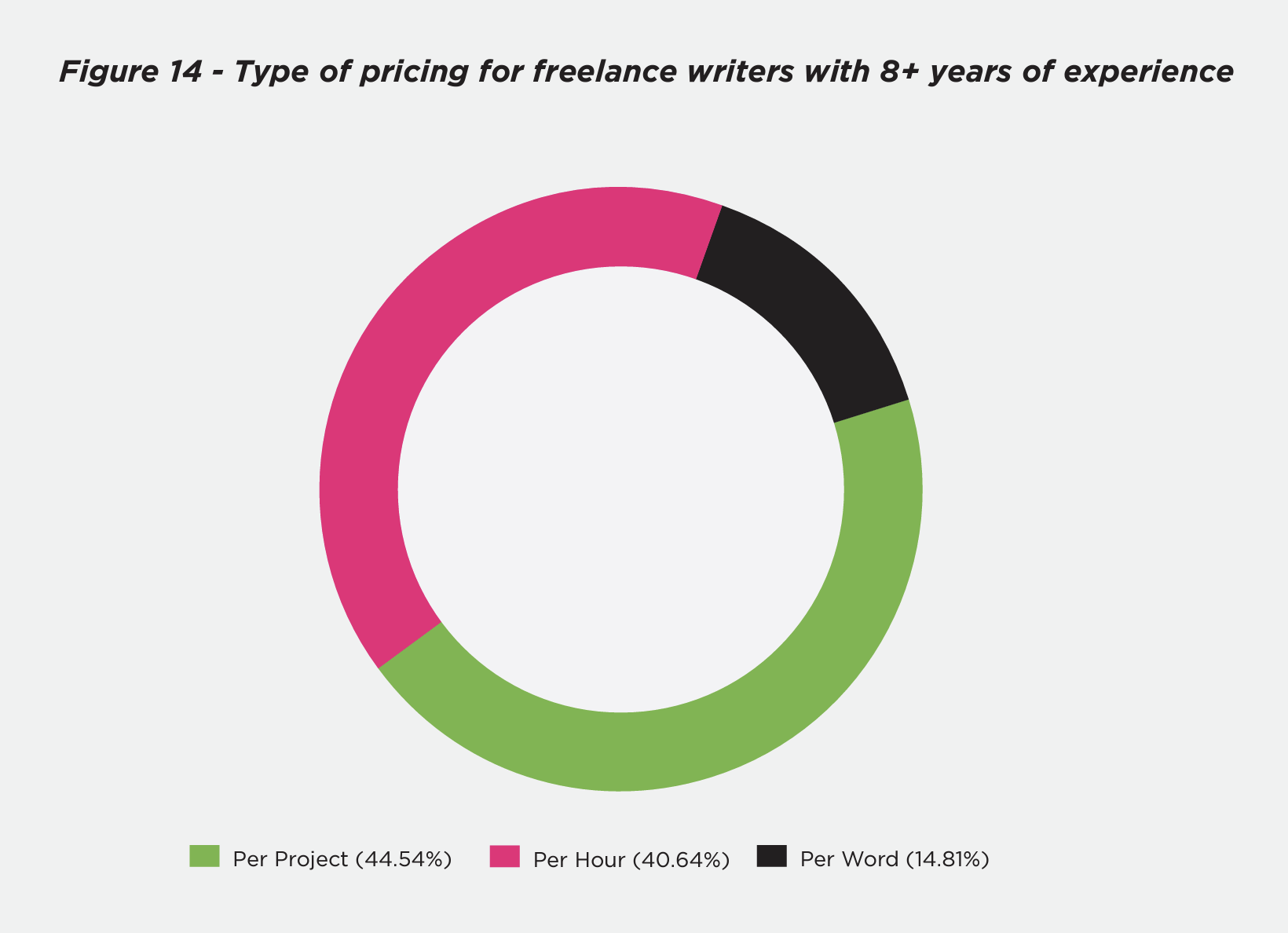
It’s also interesting to note that per project was the most popular way for high-earning freelance writers with 8+ years of experience to price their work.

Type of pricing for freelance writers with 8+ years of experience

Pricing Per Project Overview

Since freelance writing projects vary drastically depending on different variables, I opted to capture and code qualitative data, instead of creating a complicated and potentially misguided questionnaire.

A qualitative approach helped me eliminate my personal research biases, keep the questionnaire shorter for higher completion rates, and tailor my analysis based on natural responses.


Naturally, there are limitations to a qualitative question on a survey, including:

  • It’s time-consuming

  • It can be difficult to verify results

  • Two qualitative questions don’t elicit as in-depth and thoughtful of a response as an interview would

Despite these limitations, I was able to capture, code, and quantify insightful and helpful data on the following:

  • Criteria for pricing per project

  • Average price per project by content type

  • The median price per project by content type

Let’s take a closer look. Drum roll, please…

What Are the Criteria for Pricing Per Project?

Out of the 40% of respondents that price per project, the majority offered robust details on the criteria they used to determine their rates.

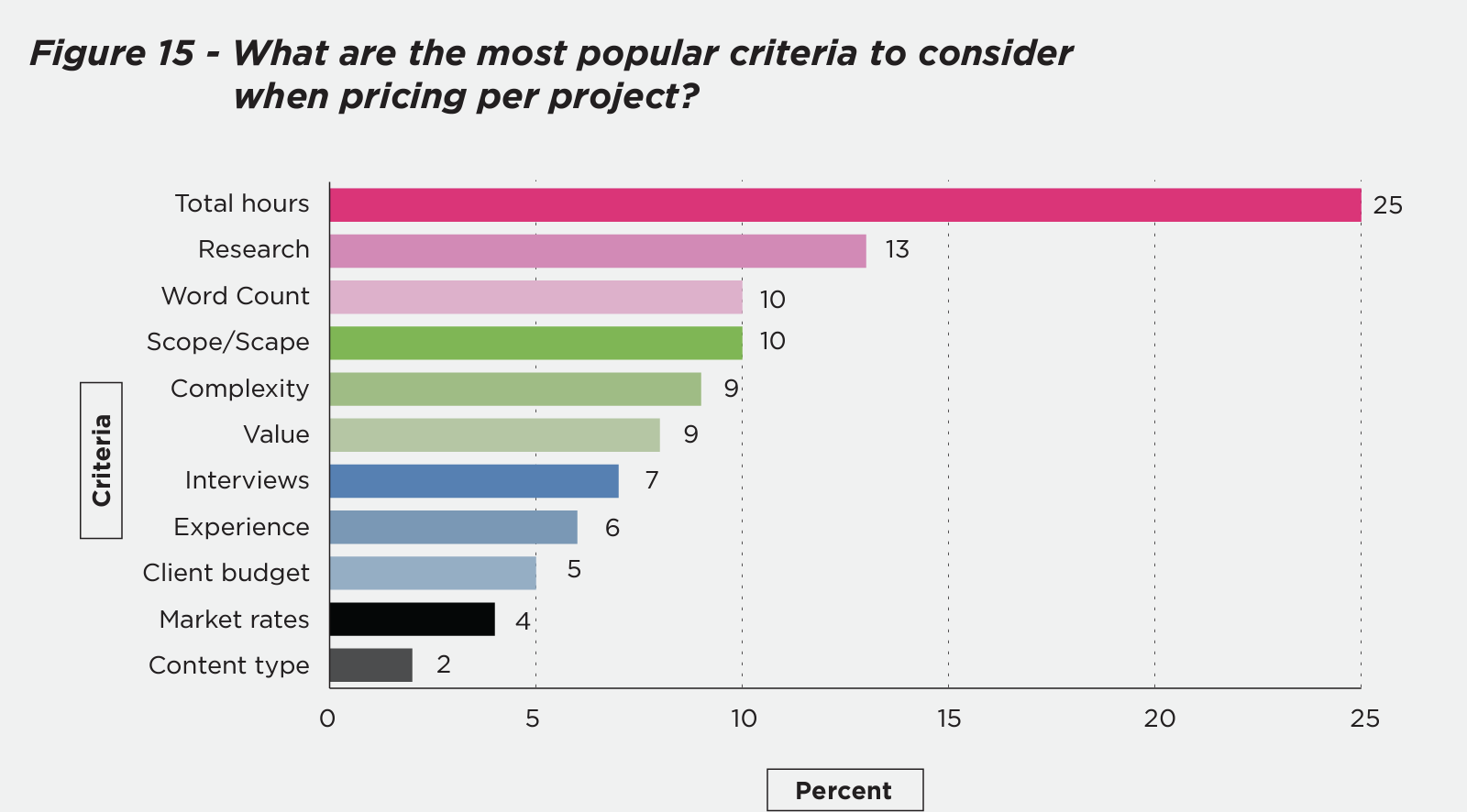
I used frequency analysis to determine what factors people consider when pricing their projects. I also used a weighted scale to show the most frequently used criteria to the least. Here is what I found.

What are the most popular criteria to consider when pricing per project?

The top 5 criteria freelance writers use to determine per project prices are:

  • Hours required to complete the project

  • Research involved

  • Total word count

  • Scope or scale of the project

  • The complexity of the product

If you are new to freelance writing or are considering switching to a per-project pricing model, consider these factors when putting together your proposals.

How Much Do Freelance Writers Charge Per Project?

Freelance writers offered specific monetary numbers on the following types of content:

  • Landing pages

  • Blog posts

  • Website copy

  • Email sequences

  • White papers/Guides/eBooks

  • Case studies

  • Ads

  • Sales letters

There wasn’t enough qualitative data to show statistical significance for different groups (e.g., gender, niche, experience, etc.), so the following averages represent the data provided by all writers in the study.

Since blog post data was robust and because blog posts vary significantly in scope and word-length, I divided the blog post pricing data into three categories: low price, average price, and a higher price.

I also eliminated any ridiculous outliers. For example, if someone said they charged $25 for a blog post, the data point went out the window.

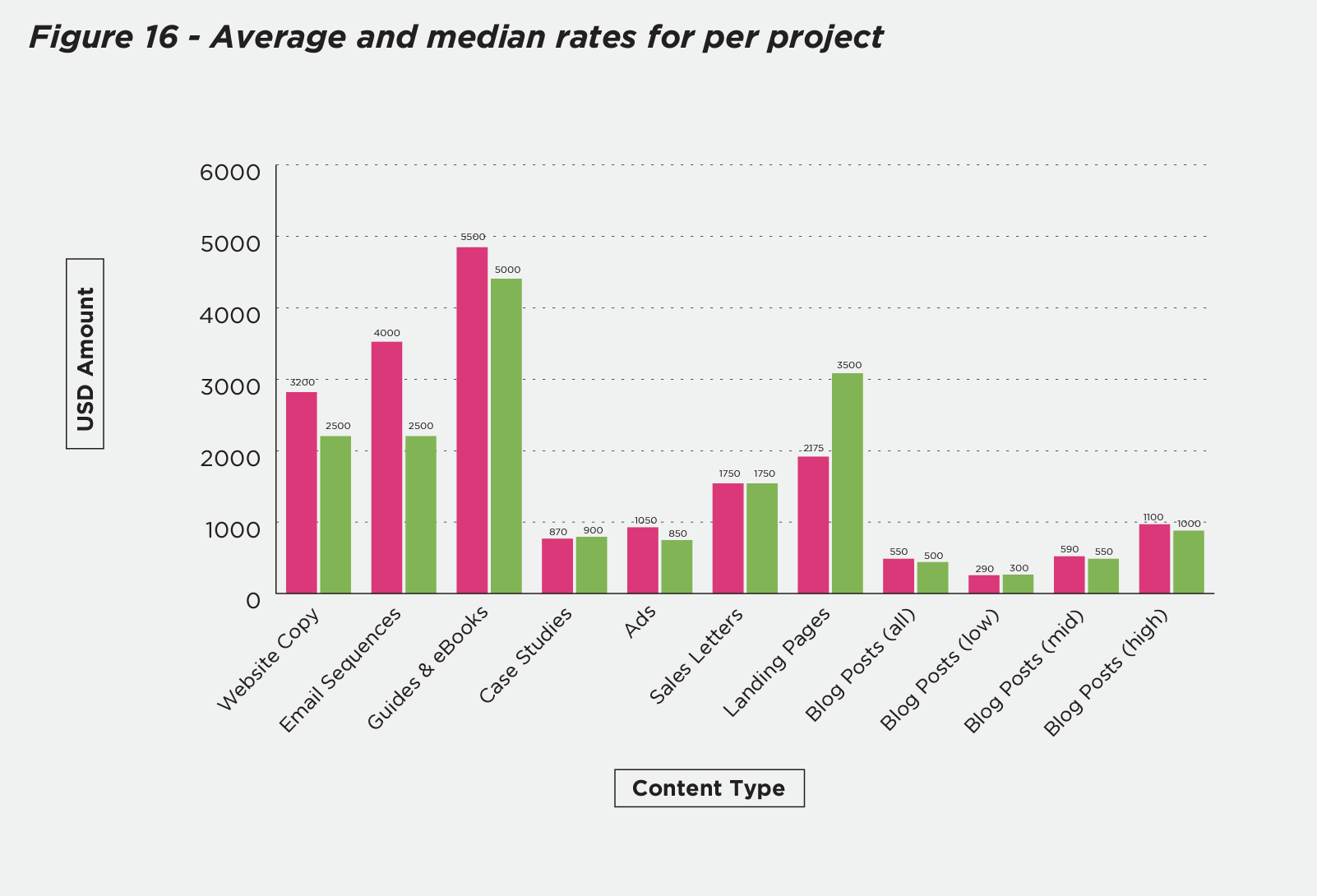
Here are the average price and median price points for people charging per project.

Average and median rates for per project

Per Hour Results

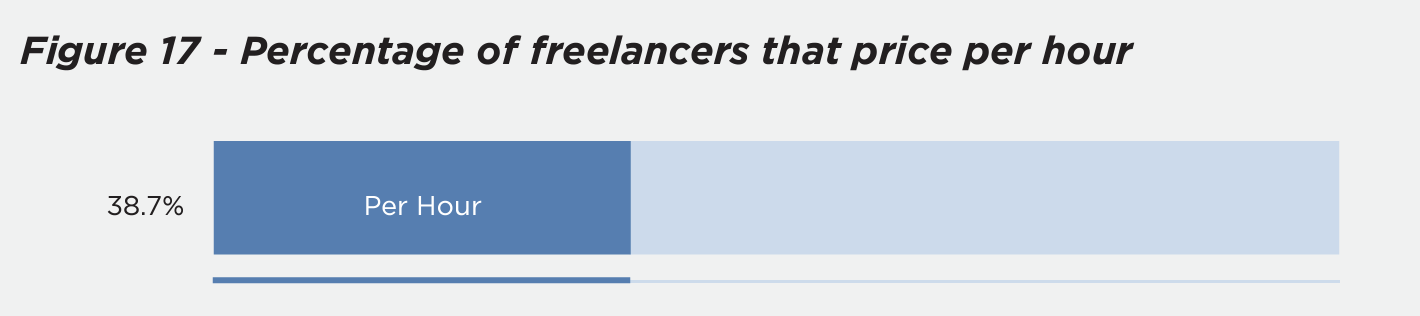
The second most popular way freelance writers priced their projects was per hour. Nearly 39% of the respondents said they priced their projects by the hour.

Percentage of freelancers that price per hour


Let’s take a closer look at how much freelance writers charge per hour and other interesting data points.

What do freelance writers charge per hour?

The data showed a wide variation in how much freelance writers charge per hour, but here are some of the most notable data points.

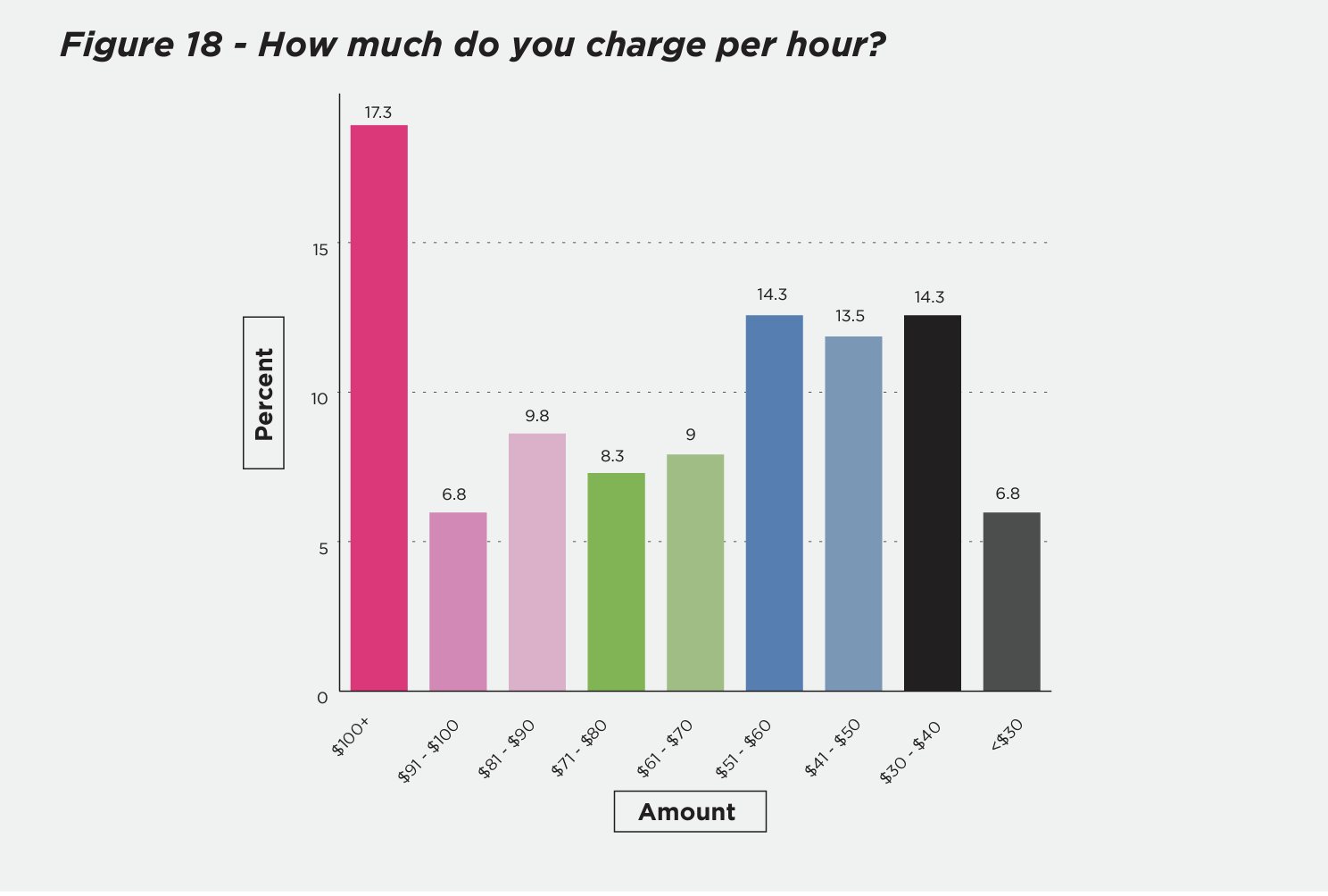
1. The largest group of freelance writers that charge per hour charge over $100 per hour.

While the freelance writers that charge per hour, charge different rates, there is good news. The most popular hourly rate for freelance writers was over $100.

How much do you charge per hour?

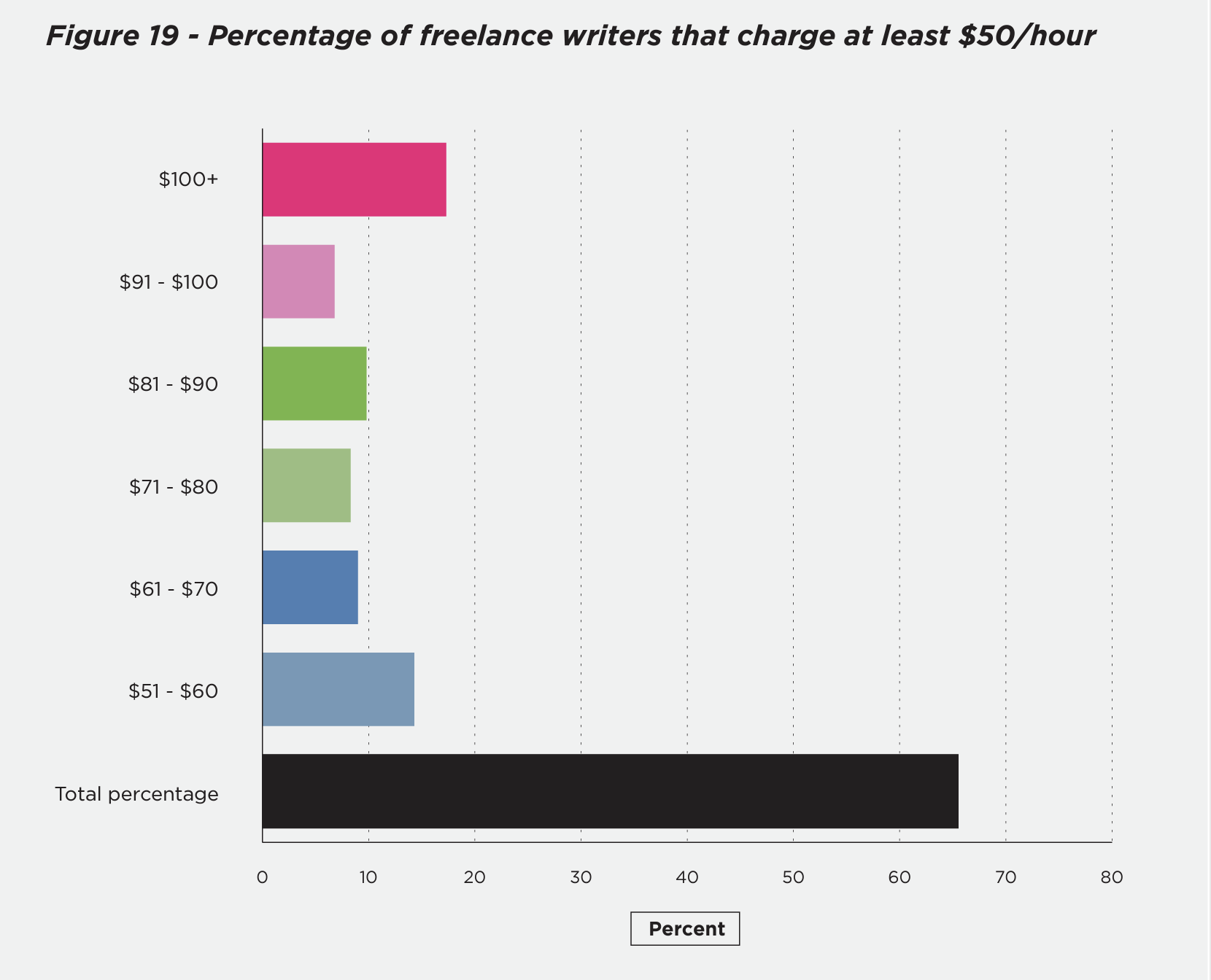
2. Over 60% of freelance writers charge over $50 per hour.

It’s also worthy to note that slightly over 60% of all freelance writers that charge per hour are charging at least $50 per hour.

Percentage of freelance writers that charge at least $50/hour

Screen Shot 2021-09-14 at 2.01.36 PM.png

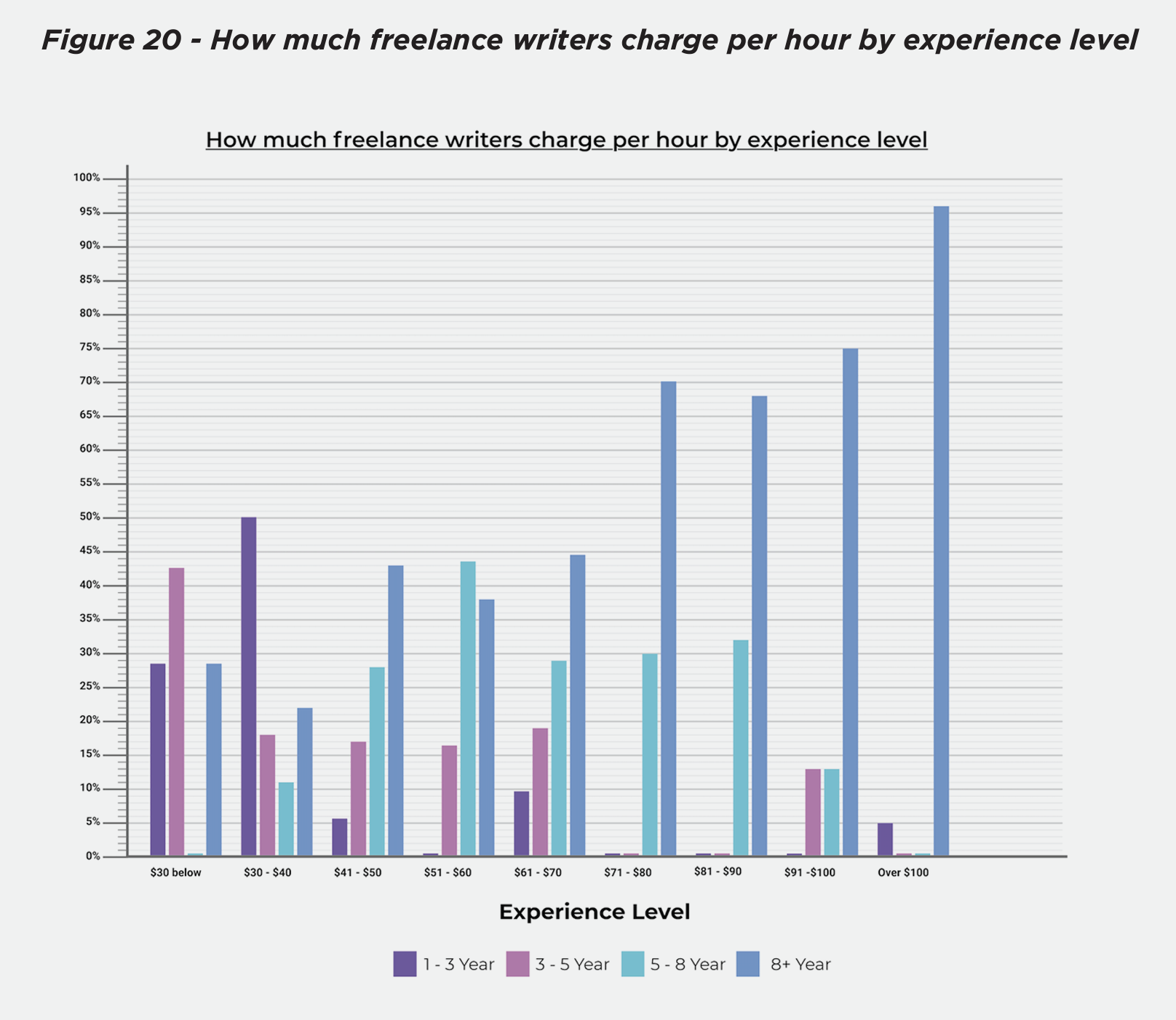
3. More experienced freelance writers are charging higher hourly rates.

The data showed that most freelance writers with over 8 years of experience are charging over $100 per hour, which is much more than people with less experience are charging.

How much freelance writers charge per hour by experience level

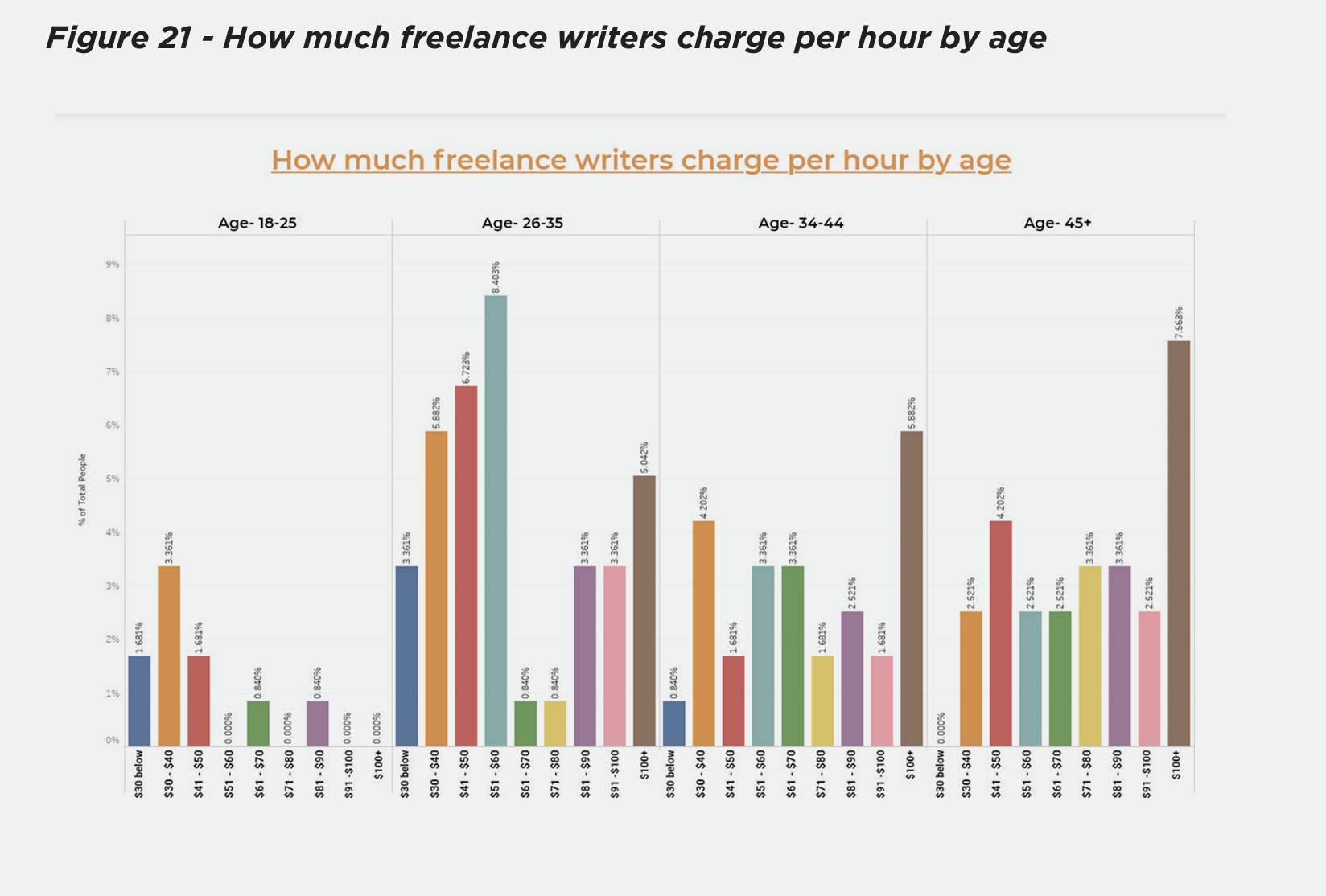
4. Older freelance writers charge more per hour

No writers between the ages of 18-25 reported that they were charging over $91 an hour, and no writers above the age of 45 were charging less than $30 per hour.

How much freelance writers charge per hour by age

5. Freelance writers with a bachelor’s degree are charging more per hour than those with a high school diploma

The majority of participants in this study (69%) reported that a bachelor’s degree was the highest educational degree attained. Twenty percent said they earned a master’s degree, 6% a high school diploma, and 1% a doctorate.

What is your highest level of education?

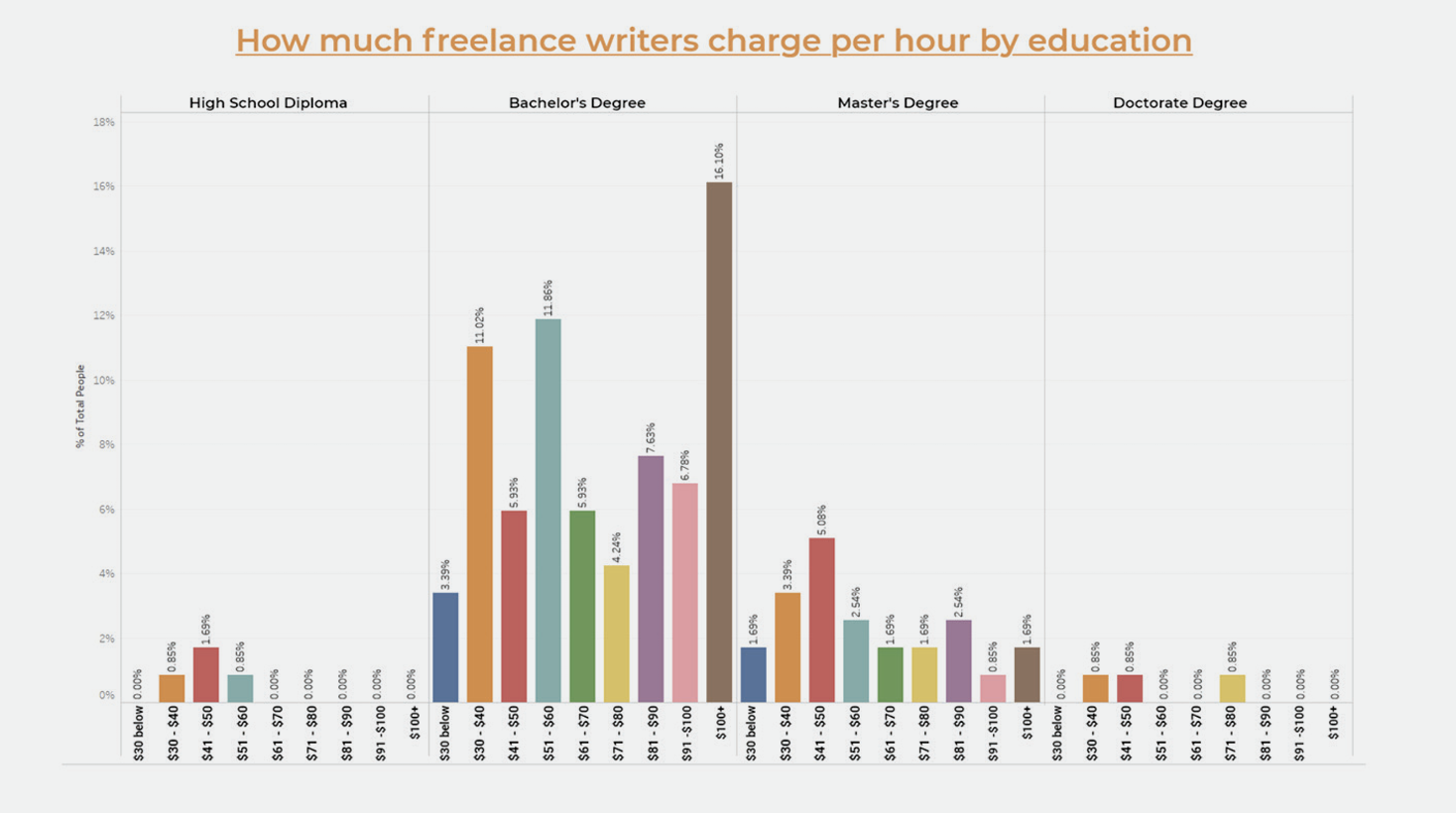
The data showed that the largest group of freelance writers with a bachelor’s degree are charging over $100 per hour. 

How much freelance writers charge per hour by education

The data is a bit slim to be truly representative of how much freelance with a high school diploma and a doctorate are charging. 

However, this study shows those with a high school diploma are charging a max of $60 an hour, and freelance writers with a doctorate are charging no more than $80 an hour. Again, these particular data points are slim, so take them with a grain of salt.

Per Word Results

The least popular way for freelance writers to price their projects was per word, with only 18% of the respondents reporting they charge per word.

Percentage of freelance writers that price per word

Let’s take a closer look at how much freelance writers charge per word and other interesting data points.

1. The majority of freelance writers are only charging up to .35 cents per word and 49% are only charging up to .25 per word

Most participants (49%) that charge per word are only charging up to .25 per word, and the majority (over 69%) are only charging up to .35 per word.

How much do you charge per word?

Screen Shot 2021-09-14 at 2.15.43 PM.png

This was surprising considering how much more freelance writers that price per project and per hour are charging.

2. Freelance writers with more experience are charging over $1 per word

While freelance writers, overall, are charging less per word, the data shows that freelance writers with more experience are charging much more per word than those with less experience.

How much freelance writers charge per word by experience level

In fact, the trend in the data shows the per word price progression. Typically, the more experience a freelance writer has, the more they are charging per word.

One freelance writer involved in the study offered helpful insight into how freelance writers can progressively increase their rates as they get more clients.

This writer said, "price based on your demand and experience, and increase your rates by 10% for every three inquiries."

If you plan to price per word, this is a smart strategy for increasing your rates as you gain more experience.

3. 97% of freelance writers that charge per word write blog posts (but not exclusively)

The data also showed that 97% of freelance writers that charge per word write blog posts (but not exclusively). Three percent indicated they wrote “other” content that wasn’t either blog posts, landing pages, ebooks, case studies, email sequences, ads, sales collateral, etc.

Out of all the various content types, charging per word for blog posts makes the most sense. However, many freelance writers that write blog posts mentioned they charge per project and use a word count range instead.

For example, one freelance writer explains blog post pricing as follows. “I use word count ranges, so a 1,000-word post might cost $750, which bumps up to $1000 for a 1250 word post. I charge extra for meetings over 30 minutes a month, and source interviews ($100 a piece).”

Another freelance writer uses a calculator to price projects and typically uses the following range for blog posts:

  • 1000-1500 words: USD 600

  • 1500-2000 words: USD 700

  • 2000-2500 words: USD 800

  • 2500-3000 words: USD 900

These ranges aren’t how you have to price your projects, but they are good examples of how a word range model works. If you currently price your blog posts per word, consider looking into pricing blog posts with a range.

Advice from Professional Freelance Writers

As part of the study, I also wanted to include expert recommendations. I received numerous excellent responses, but here are the most exciting and helpful responses from your fellow writers.

I divided the advice up into the following categories:

  • Portfolio advice

  • Networking advice

  • Rates advice

  • Pitching advice

Portfolio Advice

“Create a clean, polished portfolio with writing examples. Even if you haven't been published or hired before, create a robust portfolio that shows off your writing chops.”

“Have zero tolerance for typos on your portfolio website, LinkedIn profile, and introduction message to potential clients! Everyone makes mistakes, but not you. You can make mistakes on projects, and your clients will forgive you if you've done the groundwork of making a perfect first impression.”

“I would recommend having a website. A website helps you build credibility and show off your copywriting skills.”

Networking Advice

“I wouldn't recommend people start by freelancing. You gain valuable experience working for companies and can build a side gig with freelancing during that time. A company also gives you insider info, builds your network, and allows you to understand how organizations work internally. All of that knowledge is incredibly helpful for your own freelance business, but also in working with and managing clients in the future. Don't start out freelancing. Start out working in an organization, build empathy for those employees, understand exactly what it is they need and why, and then hit those goals without them asking every single time. When you make your client's life easier, you have a client for life.”

“Diversify your reach. Network on social media and in person. Reach out to acquaintances and let them know what you are doing and see if they know somebody looking.”

“As a writer, anyone can be your new client. Connections can happen in unexpected places. Stay open.”

“Network like crazy and cultivate good relationships with clients once you are working on a project. You never know where it might lead! Look for interesting opportunities that will help you produce strong work samples.”

“Have a vibrant LinkedIn profile with a professional photo. Make at least 20 contacts per day. Post at least five days per week: original articles weekly; post relevant memes; curate and comment on others' articles. Respond to others' posts and articles like crazy. Let people know you're a writer! Have an active presence on Facebook and Instagram. Most of all, though, be professional!”

“If you're looking to freelance in advertising, reach out to creative directors and creative recruiters. Depending on your relationship with them, either outright selling your services to them or a softer approach is ideal.”

“Join a local organization so you can meet people like yourself—and people who work in your industry but not your specific field. The whole of my freelance work comes from referrals from others in my industry—designers, filmmakers, etc.”

“Word of mouth is everything. Keep in touch with old coworkers—not just about work—you'll be top of mind when a project comes up. Never burn bridges. Also, help other people out when you can, not expecting anything in return. It will come back to you.”

Rates Advice

“Don't be afraid to charge the industry standard. When you undercut yourself, you also make it difficult for others to charge reasonable rates. Understand the industry standard and develop your rates from there. When you land on a number you're comfortable with (and you've bounced it off a few people), don't be afraid to say it with your chest.”

“As you learn and get better, raise your rate to reflect this. Don't be stuck taking any project and charging bargain rates. Know that you are worth something and charge for it.”

“Avoid doing free samples. Also, encourage previous clients to share their testimonial/feedback because this could go a long way in winning you more clients.”

“Don't ever offer to do a project for free. It can be a major turn-off when pitching to clients. *Free* often reads: ‘I’m new and don't know what I'm doing’ or ‘I’m going to be a time suck because I'll need a ton of hand-holding.’ It also undervalues your worth. Good copywriting isn't just a skill—it's a talent, an art form, and even a science. Any client that doesn't realize that isn't worth your time.”

“Don't be afraid to charge what you are worth from the very beginning. A lot of new work comes from referrals, and if you undercharge, you may get stuck with a rate that is not sustainable. Don't be afraid to charge what you deserve.”

“Find out what others are charging. Charge 10% more. It's scary, but you'll gain confidence once clients start paying you what you ask.”

“Avoid content mills.”

Pitching Advice

“Consistency is key. Make sure that you send out 20-30 cold pitches a day to keep the pipeline filled.”

“Be persistent. Put out a ton of feelers and don't get hung up on anyone lead, just keep pitching and approaching more potential clients.”

“Be specific. It's much easier to sell blog posts than to sell ‘I’ll write whatever you need.’ Be unconventional on your job searching. Reach out to recruiters directly.”

“If you think you're sending enough cold pitches/LOIs/etc., You're definitely not! Send as many as you possibly can, and then send some more. It's one of the best ways to find new clients, especially if you don't have a network that can refer you out yet.”

“Make your pitch about them, not about you. People care less about who you are and what your experience is and how you can help them. Also, be willing to do a little work upfront pro bono if it will help you land a paying gig.”

“As long as your pitch is well researched and addresses a real need - you'll come across looking like a badass, action-taking, freelancer who isn't afraid to go after what she wants.”

I couldn’t have said it better myself.

Conclusion: How much should freelance writers charge?

Well, it took a lot of time to put together this report, and I got temporarily banned on LinkedIn from sending any more connections. But it was worth it!

The most interesting and shocking findings to me include:

  • How many freelance writers are charging per hour as opposed to per project

  • How low most per-word rates are (boost those prices, peeps)

  • How high hourly rates are (good work)

  • How “hours spent” on a project is the most important criteria for those charging per project

  • How the majority of new clients come from referrals.


I hope this report provided some valuable insight to help you benchmark your rates.

For more information on how to start a freelance writing business, please visit the products page

For freelance tips and jobs, subscribe to the newsletter.

Research by Ashley R. Cummings.

Is content marketing dead as we know it?

Hot take?

2019-early 2023 were the organic content glory days.

The content of "The Great Resignation" was 🔥!

Before 2019, organic content was...fine. Did the job.

Post-2023, organic content has been...all over the place.

So, why were "the content glory days so rad?" A couple of reasons:

1️⃣ A shift in style: Organic content got a glow-up. It maintained the traditional formatting internet-content needs and we still saw stories focused on data-driven insights, but writers also started to borrow sound techniques from journalism—creative reporting, editorial content, SME-led content, and original data. Organic content got a glow-up and people were reading it.

2️⃣ Big marketing budgets: When life went online, companies invested heavily in content. This gave content teams the resources ($) and flexibility to build what's necessary to make great content (e.g., a content director/editor, SEO experts, a team of experienced writers, editors/quality control, etc.).

Once AI exploded, the content world got weird. I'm not a data machine, so I'll have to get anecdotal here. But here's what I've seen over the past 2 years:

🤢 The wrong kind of AI-adoption. Conference after conference highlighted keynote speakers with messages of replacing content teams with cheap AI-generated content machines for increased organic visibility. Then, we saw an influx in bland blogs and articles. We've seen gobs of sites created and supported fully by AI. We've also seen AI-automation littering our inboxes, comments, and DMs. We've entered an era where full AI-adoption (not use) has devalued customer-client relationships and crowded out meaningful content.

(Sidenote: I am not anti-AI. I have found so many uses for it. For example, I use it to help me organize interview transcripts. I also use @strut_ai to organize the writing process. I use it to define easy concepts and check for things I've missed. But, I don't use it to think for me).

Google went whack, and so did strategy. First, it was 100% penalizing AI content. Then, it couldn't detect it. Then, it decided to adopt it. Then, we were introduced to SGE. Then, there was the most recent Google update. Then, tons of sites got taken down. Then, Google doubled down on its helpful content messaging (again). Then, there was Gemini. ??? It's been a bit hard to follow. And, instead of focusing on producing GOOD content for PEOPLE, teams have been clamoring to keep up with Google and hold on to a shred of what may still be working. This seems misguided.

👀 Leaders started slashing content budgets. It's shocking and amazing what AI can do. I never thought I'd see a machine that churned out even semi-coherent sentences. And, when you're not a writer—years into understanding what it takes to produce a good piece of content—it's easy to dismiss researching, writing, and editing as easy tasks that anyone (or a machine) can do. It's easy to assume, "well, AI can do that, so why am I paying hundreds of thousands of dollars to my content team?" And the effects of this mindset have been a huge bummer. Good writers and editors are suddenly "too expensive." We've seen companies lay off internal content teams and freelancers en masse.

🤦🏻‍♀️ Audience research is no longer in 1st place. It's easy to adopt a shiny new tool and plaster messages across the world. It's not easy to make good messages find and resonate with the right people. It's been strange to see "let's do more," instead of "let's do what's right by our audience."

🤖 A lack of professional trust and courtesy. Let's illustrate this with an example. My husband is a professional musician. When he listens to music, he hears things that I can't hear or even comprehend. He hears and understands all the tiny elements that make a piece of music enjoyable. I hear the final product and know that I like it. That’s about it. But, I also know that if music making or music direction were up to me, the end result would be a disaster. No one would want to listen to it because I’m not a musician. This seems like an easy concept to grasp, but this way of thinking is not a luxury afforded to writers or editors right now. Professionals who are not writers don't understand the tiny nuances of writing. I see posts all of the time that say, "Hire an SME and teach them to write," or "AI can do this for you” or “10 easy steps to mastering copywriting." You don't just teach an SME to write overnight. You don’t learn to write without years of practice. And, AI can predict, define, and replicate (it’s great at this), but it can't create. As a result of this, I've experienced more professional discourtesy these past 18 months than in my full 14 years of marketing. Prospects balking at prices. Ghosting. Unreasonable expectations. A lack of understanding of what it takes to produce good content and an unwillingness to listen. It’s been weird.

I'm hoping 2024 is the year content gets normal again. That marketers return to their audiences and start creating things that have never existed before.

For more insights like this, subscribe to the Content Connect newsletter.